

♦ Opinion & Fact:
It is essential when writing an opinion essay to clearly separate opinion and fact.
When teaching essay writing and critical reading skills to students (adults), I have often been dismayed to discover that they accept written opinions as facts. Alas, such is the power of the written word!

What’s real? What is your interpretation?
How can we develop informed opinions if we unthinkingly accept the opinions of others as facts? Present the same facts on a particular issue to ten people and you could end up with ten different opinions which can be influenced by personal experience, interpretation, and understanding of the issues to name just a few. What happens to the facts? What’s real? Do we just listen to the loudest, most opinionated voices?
When you write an opinion essay, it is necessary to state your opinion/s very clearly. Everyone should have the freedom to state his or her opinion, however disagreeable it may be to others. An opinion is neither right nor wrong. A fact can be checked for accuracy and truth.
Importantly, you need to support your opinions with facts and examples, otherwise why should anyone accept what you say? How can you expect a top exam result if your essay is unconvincing?
♦ Essay Structure:
◊ Introduction
What is your topic and what is your opinion? State them clearly in the first paragraph. Use everyday language but not slang.

19th-century author Oscar Wilde
◊ Main Body of the Essay
You need to use facts and examples to support your opinion. The length of the main body depends on why you are writing. If you are writing for an exam, your time and word count will be limited and perhaps one or two paragraphs will be sufficient. If you are a journalist, this section could be several paragraphs.
Make sure that the reader can follow your ideas and examples easily. Sequence your facts logically. Chronological sequence is often the simplest. You may prefer numerical order.
Do not introduce irrelevant information. Use facts and examples that are directly related to your ideas in the introduction.
◊ Conclusion
This is a repetition of the ideas in your introduction, using different words of course! This final paragraph lets the reader know that you have finished and acts as a summary of your ideas.
∼ ∼ ∼ ∼ ∼ ∼ ∼ ∼ ∼ ∼ ∼ ∼ ∼ ∼
I recommend that you read an excellent example of an opinion piece which I have included below. It was written by Jacinta Price, Councillor for Alice Springs (Northern Territory, Australia) on Facebook, in 2020, a superb example of evidence-based writing.
Note that Jacinta Price:
◊ states her feelings plainly and strongly in the first paragraph
◊ provides a wealth of facts and examples to support her opinions, and
◊ in conclusion, reinforces the views outlined in the introduction.
Jacinta Nampijinpa Price’s Post
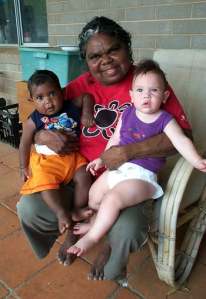
Given we are continually being denigrated as a nation and bombarded by accusations of racism and bigotry, I felt it wasn’t only necessary to defend my home and the country I love but to also provide the overwhelming evidence that demonstrates these accusations are lies. If we can’t have pride in our own nation how are we expected to evolve successfully? If we keep telling a particular demographic they are victims of others of a certain skin colour we are effectively removing that demographic’s agency and that, to me, is completely un-Australian.
Here is a list of our nation’s achievements toward Aboriginal Australia and dare I say there’s very likely a whole lot that I have missed but we have to start somewhere right?
1856 – In South Australia all Men including Aboriginal Men were given the right to vote.
1896 – In South Australia all Women including Aboriginal Women were given the right to vote, 32 years before Women in England were given that right.
1948 – It is not well understood but no one in Australia was an Australian Citizen up until this year. We were regarded as British Subjects until the Citizenship Act was passed. Citizenship Rights were being extended to Aboriginal Australians gradually throughout the 1950’s and 1960’s by Coalition Governments’.
1962 – Aboriginal Australians were granted the Right to Vote by a Coalition Government.
1964 – Aboriginal Australians were virtually granted full Citizenship Rights under a Coalition Government when the Aboriginal Ordinance was repealed.
1967 – The Referendum went through with overwhelming support of well over 90% of Australians voting to allow Aboriginal Australians to be included in the Census and for Aboriginal Affairs to become a Commonwealth responsibility. Another successful Coalition Government initiative.
1968 – The Equal Pay decision was applied by a Coalition Government.
1970 – A state Coalition Government in Victoria handed back the Lake Tyers reserve to the Aboriginal community.
1971 – Senator Neville Bonner, a Liberal, became our first Aboriginal Parliamentarian. Since then there have been 43 Aboriginal MP’s throughout state and federal Parliaments in Australia. To add to this 8 MP’s have recorded Aboriginal Ancestry but have not been identified as Aboriginal. The Northern Territory gave us the first and only Government, at any level, led by an Indigenous Australian. This is not widely known or celebrated because Chief Minister Adam Giles was with the Country Liberal Party.
1976 – The NT Land Rights Act was passed by a Coalition Government. Under this Act around 45% of the land and 80% of the coastline of the NT has been handed back to traditional owners; I’m one of them.
1992 – The High Court overturned the Principal of Terra Nullius with the Mabo Decision.
1993 – A Labor Government passed the Native Title Act.
In Australia today we have experienced historically significant acts of symbolism that include the 1991 Reconciliation Walk Across Sydney Harbour Bridge. For six hours 250,000 Australians of all backgrounds walked together to demonstrate the fact we are not racist but are overwhelmingly in support of Aboriginal Australia. We have spent a week every year since commemorating this event and what it means.
A Labor Prime Minister said ‘Sorry’ on May 26th 1998 in recognition of the impact of the policies of forcible removal of Aboriginal and Torres Strait Islander children from their families. These days and others are commemorated every year to recognise historical injustices and to demonstrate that everyday Australians DO care for the plight of Indigenous Australians.
We spend days and weeks each year recognising Aboriginal Australia in the following ways:
National Apology Day
National Sorry Day
National Close the Gap Day
Anniversary of the Referendum
Reconciliation week
Mabo Day
Coming of the Light
NAIDOC Week
National Aboriginal and Islander Children’s Day
International Day of the world’s Indigenous Peoples
Indigenous Literacy Day
Anniversary of the UN Declaration of Human Rights of Indigenous People
Throughout Australia ‘Welcome to Country’ or ‘Recognition of Country’ is applied as standard ritual practice before events, meetings and social gatherings by governments, corporates, institutions, primary schools, kindergartens, high schools, universities, work places, music festivals, gallery openings, conferences, and so on and so forth.
Aboriginal Australia is a part of the daily life of us all in some way shape or form and yet we are still facing accusations of racism in our nation. We have been hoodwinked into believing that somehow reconciliation means appeasing the aggrieved, those who refuse to forgive, and we are held to ransom every time the goal posts are shifted.
The good will and support of the Australian people is always on display and it has only gathered momentum along the way.
It’s time now to recognise the efforts of thousands of Australians throughout our history who have done what was in their power to support Aboriginal Australia including those who are not Aboriginal but who call us family. It’s time to recognise that we cannot possibly be a racist country if over 87% of people who identify as Aboriginal in non-remote areas of Australia are in fact married to non-Aboriginal Australians.
We must also remember that our nation is not only simply black and white. We are rich with the contribution of Australians of many backgrounds and this is one of our greatest strengths as a nation. What of the 30% of Australians who were born overseas, from every country on earth? Are they all racist too?
It’s time to stop feeding into a narrative that promotes racial divide, a narrative that claims to try to stamp out racism but applies racism in doing so and encourages a racist over-reaction. Yes, it is time for some truth-telling.
We should be celebrating what we have achieved together before the good will of the nation runs out.


 Mary's English Blog
Very helpful thank you Mary!
LikeLike
This was helpful. Thank you for this!
LikeLike