How to Describe a Painting using ‘Wh…?’ questions

‘The family of Darius before Alexander’ by Paolo Veronese 1565-1570
♦ ♦ ♦ ♦ ♦ ♦ ♦ ♦ ♦ ♦ ♦ ♦ ♦ ♦ ♦ ♦ ♦ ♦ ♦ ♦ ♦ ♦ ♦ ♦ ♦ 

Greetings English learners!

How would you describe the painting above? Where would you start? Well, I have previously posted two lessons on:

1) How to Describe a Picture, and

2) How to Describe an Experience. 

In those two lessons, I explained how to describe something by using ‘Wh…’ question words: Who, What, Where, When, Why, & How.
I have come across someone else who sensibly uses this excellent method of organising your ideas and responses. I  recommend that you watch the following video by The National Gallery, ‘How do you actually look at paintings?’ Ed, the narrator provides a range of ‘Wh…’ questions to ask about this complex painting. Importantly, y
ou could use his questions to describe all kinds of pictures/scenes.

I would add the question word ‘How…?’ How do you feel when you look at this painting? How do you think the people in the painting feel?

SHADOWING

This video is less than two minutes long. The narrator, Ed, speaks clearly and correctly. The subtitles are accurate. If you wish to improve your spoken English, try shadowing: Using the subtitles, read aloud with Ed. You will notice his intonation (how he emphasis some words) and his pauses. A few minutes practice is an invaluable lesson in improving your English speaking skills. At the same time, your listening and reading skills will improve. Too easy! What are you waiting for? Do you have a spare few minutes now?

🎨 🎨 🎨 🎨 🎨 🎨 🎨

Posted in Advanced (Level 6+), Cambridge, Grammar, IELTS, Intermediate (Level 4), Listening, Pre-Intermediate (Level 3), Upper Intermediate (Level 5) | Leave a comment

A song with (mostly) Present Tenses

Have you heard the latest song by RAYE – Where is my husband?

I just love it! It’s fun, clever, and addictive. Watch the Official Music Video on YouTube. The subtitles are very helpful especially for English learners. Rachel, the lead singer believes that there is a husband somewhere out there destined for her, but, where is he?? She doesn’t want to grow old waiting. She doesn’t want to waste time with the wrong men. Where is he?? Where is my husband?!

Most of the lyrics are about how Rachel feels – now. However, in English, we often use Modal verbs (must, might, could, would, etc.) to convey feelings and beliefs which affect us now. 

* He must need me.

* I would like a ring.

* I would like a big and shiny diamondthat I could wave around and talk and talk about it.

Let’s examine these sentences:

Must, would, and could do not describe actions or facts now or any time. 

* He must need me.

This is Rachel’s belief. We don’t know if it’s true.

* I would like a ring.

* I would like a big and shiny diamondthat I could wave around and talk and talk about it.

This is all hypothetical. She doesn’t have a diamond ring to wave around. We think like this, don’t we? We think in the present about beliefs and possibilities for now and the future. They don’t always eventuate but we need language to describe our feelings and beliefs. This is why we have Modal verbs.

The song is very fast. You can watch it at 75% speed which is much easier for listening. However, you then miss the urgent, frenetic pace which is so compelling. 

♥️  ♥️  ♥️   🤵 👰 ♥️ ♥️ ♥️

Posted in Advanced (Level 6+), Grammar, Intermediate (Level 4), Listening, Songs, Upper Intermediate (Level 5) | Tagged , , , | Leave a comment

Sensational, Skilful Semicolons!

https://unsplash.com/photos/o4c2zoVhjSwWhat the ….. !!    Not another SEMICOLON !!

What is a  SemicolonLet’s have a look.

;

a) Spiderman is my favourite Super Hero; he’s my favourite person!

b) Spiderman is my favourite Super Hero; actually, I still really like Superman.


What is a Comma?

We use a Comma a) to separate a list and b) to separate an Independent Clause and a Dependent Clause. Of course, there are many more uses for commas, but for this post, I’m just listing these two.

a) I love Spiderman, Superman, and Wonderwoman.

b) Even though Spiderman is my favourite Super Hero, I still really like Superman.

‘Keep reading Spiderman! You have a lot to learn! Everyone knows that I’m the most famous Super Hero; I’m much better looking too!’

So what does this all mean?? What’s wrong with commas?

It means that some of you are using Commas when you should be using Semicolons!

In many European languages, it is correct to separate two sentences (Independent Clauses) with a comma. However, it is not correct in English!

Not only is it incorrect in English, it is a very big, terrible NO NO!  

If you are studying English as a second language, you need to understand this important rule.  (For more information on how to write sentences, click here.)

For now, I’m going to show you how to use Semicolons without giving a long grammatical explanation. 

I was given a lovely framed picture with the following quote by Mother Teresa:

‘Be happy in the moment, that’s enough.
Each moment is all we need.’

Can you see the problem with the comma? You cannot connect two Independent Clauses with a comma! 

Be happy in the moment. This is an Independent Clause (a sentence).

That’s enough. This is also an Independent Clause (a sentence).

An Independent Clause + comma + an Independent Clause
= A very big, terrible NO NO! 😤

This very big, terrible NO NO is called a Comma Splice. 😖

There are only three ways you can connect two Independent Clauses:

  1. with a full stop

Be happy in the moment That’s enough.

2. with a conjunction

Be happy in the moment because that’s enough.

3. with a Semicolon

Be happy in the moment; that’s enough.

The example I’ve given above of the ungrammatical Comma Splice (Be happy in the momentthat’s enough.) is a typical example of mistakes that native speakers make as well as English students. It is because you want to keep both ideas together. You don’t want to separate them with a full stop, and a conjunction is not always suitable.

What can you do? Use a Semicolon! It will keep your ideas together and you won’t need to think about conjunctions.

  • For more information on how to punctuate sentences, click here.

; ; ; ; ; ; ; ; ;

Posted in Advanced (Level 6+), Cambridge, Grammar, IELTS, Intermediate (Level 4), TOEFL, TOEIC, Upper Intermediate (Level 5), Writing | 1 Comment

Silent English Letters

Greetings English Learners! It’s time for some silliness!

The English Language does seem to have an unfair number of silent letters. How can you remember them all? Well, it takes time and familiarity, and a generous dose of humour helps!

With this in mind, I thought you might enjoy a short video featuring the witty English comedian, Michael McIntyre. He pokes fun at the absurdity of English silent letters by pronouncing them emphatically during his proposal of a Silent Letter Day.

Under the video, I have listed the words with silent letters that he uses. The silent letters are bold and underlined. Change the speed to 75% if he speaks too fast for you.

 Silent Letters

hour

half

knickers

knuckles


February

talking


knitting

knife


swordfish

yoghurt


wrapped

scissors


listen

receipt


Chloe

school


subtle

should

Wednesday

autumn

walking

climbing

buffet

salmon

gnome

cupboard

honestly

known

champagne

knock

lasagne

knocked

        🤫 🤫 🤫 🤫 🤫


Posted in Advanced (Level 6+), Cambridge, ESL Teachers, IELTS, Intermediate (Level 4), Listening, Pre-Intermediate (Level 3), Pronunciation Videos, Speaking & Pronunciation, Upper Intermediate (Level 5), Vocabulary | 2 Comments

A Song with “Don’t Have To”

Photo by Vadim Malitskii on Pexels.com

Have you heard the song ‘Bloodline‘ by Alex Warren and Jelly Roll?

The song is a message of hope and encouragement to *break the cycle of past pain and struggles. 

*break the cycle = end a repetitive, negative pattern, often one passed down through generations

The message is that you don’t have to be trapped in harmful behaviour because of where you come from. You can be better than that.

Don’t Have To

English students often get ‘don’t have to’ and ‘must not’ confused. This is understandable because ‘have to’ and ‘must’ have a similar meaning. However, ‘don’t have to’ means that something is not necessary.

Jelly Roll sings “You don’t have to follow in your bloodline”. He means that it is not necessary to follow the negative behaviour of your bloodline (ancestors: parents, grandparents etc). You have a choice. You can change your life. 

You can watch the YouTube video below with subtitles. However, they are not all correct so I’ve provided the Lyrics video also. Enjoy!

Posted in Elementary (Level 2), Grammar, Intermediate (Level 4), Listening, Pre-Intermediate (Level 3), Songs | Tagged , | Leave a comment

Advanced Reading – Improve your English & your Knowledge!

Is it possible to become a successful English writer when English is your second language? 
               

Imagine being taught English at school but not hearing it spoken outside of  the classroom.

This is an everyday fact for many of you.

Imagine not using English until you have moved, as an adult, to an English speaking country.

Would it be possible to reach native-speaker proficiency?

I know that you’ve been told that adults can’t speak English like a native speaker unless they become proficient when they’re a child.

You may have also been told that to be considered proficient, you need to speak with an English accent. However, there is no one true English accent. All you have to remember is that you need to speak clearly so that people can understand you. Keep your accent. It is an important part of you. You don’t need to speak like a native!!

Penelope Cruz and Javier Bardem

Think about actors like Penelope Cruz,  whose first language is Spanish and Audrey Tautou, whose first language is French. They both sound wonderful when they speak English with strong Spanish / French accents.  

I have taught Asian students who don’t believe that they will be able to speak or write at an advanced level because their language is so different to English. Well, just listen to these Korean pop idols who have never lived abroad and yet speak fantastic English. What about Takahiro Moriuchi, the lead singer from the Japanese group One Ok Rock?  He sings and speaks English very well and is very easy to understand.

Taka Moriuchi …


Korean pop idol – EXID’s Hani

In case you have not yet realised my point, it is this: you should never feel that your English is not good enough for speaking or writing! It’s amazing what you can achieve if you have the right attitude!

I would now like to introduce you to a man who didn’t start speaking and writing English every day as part of his job until he was nearly forty – who has become an internationally successful English writer – reaching and for two of his books on Amazon.

JC Ryan has become a bestselling author of spellbinding archaeological mysteries and crime suspense-thrillers.  He has published books in three series. They are all available from Amazon at very low prices.

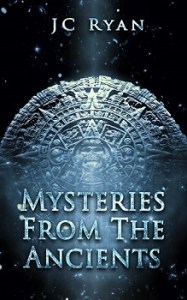
You can sign up for his confidential mailing list and  receive the Free eBookMYSTERIES FROM THE ANCIENTS, an 80-page e-book about thought-provoking, unsolved archaeological mysteries. Click on the link to see an image of the free book and a description of the contents.

Reading is one of the best ways to improve your English because it gives you Grammar: word order and verb usage; Vocabulary, including prepositions, articles, phrasal verbs and collocations; and Knowledge. Reading helps you become more confident with your English. You also acquire more knowledge about the world and are better prepared to discuss all kinds of topics in Speaking Exams as well as in everyday conversations. 

My advice to you is to check out the links above. Read about J C Ryan. Sign up for the mailing list and free e-book. Then, read it! 

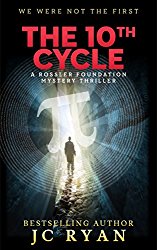
If you find MYSTERIES FROM THE ANCIENTS an exciting read, have a look at the three series J C Ryan has published. There are no free copies available. However, when I contacted Mr Ryan and asked if I could write about him on this blog, he very kindly provided the first chapter of his first novel, The Tenth Cycle, for me to use. I feel very privileged to be able to share it with you.

So, for your enjoyment,  here is a sample of what can be achieved by a writer whose first language is not English:

The Tenth Cycle

A Thriller

A Rossler Foundation Mystery

By JC Ryan

This is the first book in the Rossler Foundation Mystery Series.
Want to hear about special offers and new releases?
Sign up for my exclusive mailing list JC Ryan Books
Copyright ©2014 JC Ryan
All Rights Reserved.

Chapter 1 – Near Kabul, Afghanistan, July 2009

Daniel Rossler and two of his friends from ISAF
headquarters in Kabul, Afghanistan set out early in the morning
on Daniel’s birthday, July 8th, on the A1 toward Jalalabad some
one-hundred and fifty klicks and three hours or so to the east.
IEDs, or Improvised Explosive Devices had made this stretch of
road one of the most dangerous places in the world.

Daniel, an irrepressible 26-year-old journalist embedded
with the Marine unit, matched his comrades’ skill for skill except
in armed combat. As a journalist, he was neither expected nor
permitted to carry a weapon, though his upbringing in the North
Carolina Mountains had included skill with a hunting rifle. Now,
his preferred physical activities were hiking, swimming, and the
occasional impromptu wrestling match with the two friends in the
Jeep with him today or other opponents from their unit. At sixfoot-three,
his wiry frame was perhaps a little lighter than most of
his heavily-muscled Marine opponents, but his quick thinking and
unconventional moves allowed him to win more often than he
lost.

“Hey, Sarge,” Rossler yelled over the noise of the vehicle
on the highway. “Isn’t this the road that the Taliban keeps
bombing?”
“You afraid of a little rebel IED, Rossler?” the sergeant
retorted.

That effectively shut down any further discussion on the
matter. The one thing Daniel couldn’t allow was his Marine
friends thinking he was a wuss. Traffic was unusually light this
morning, which should have warned the three friends, especially
the Marines. Instead, they were elated to be making such good
time during the early hours before the heat of the day set in.

Seeing the well-populated area on both sides of the road
for the first fifty klicks, Daniel wondered at the logic of the Taliban
rebels who harassed travelers along this road without regard to
loyalty. Anyone could be killed by an IED, even Afghan citizens
making their way to market, or children.

He was aware of the joint task force squads that had been
specially trained to sweep for and dispose of the deadly items,
though. Daniel felt as safe on this trip as he did anywhere in
Afghanistan, which was to say, not very. Nevertheless, today’s
mission would provide good background for his next column. It
was important work, and Daniel was good at it.

Daniel didn’t realize he had stopped watching the road
ahead until he heard Sgt. Ellis shout, “Look out!” He found himself
in mid-flight as the Jeep swerved violently, and then overturned
beside the road, pinning Ellis and the driver, Sgt. Pierce, and
throwing Daniel clear. He was trying to sort himself out to stand
when shots rang out from further up the road.

Continue reading

Posted in Advanced (Level 6+), Cambridge, IELTS, Reading, Upper Intermediate (Level 5), Writing | Tagged , , | Leave a comment

The Crocodile and The Monkey : a Poem by Vikram Seth

Greetings English Students!

It’s Story Time!

Who doesn’t love a great story? Rare Books Beastly Tales by Vikram Seth ... Today, I’m going to share a fabulous story with you: The Crocodile and The Monkey by Vikram Seth. It may look like a children’s story, but it has deep-rooted meanings. It’s a short story, written as a long poem.  To really appreciate how powerful the English language can be, you need to listen to it.

Vikram Seth is an incredible wordsmith and his poem is read beautifully by Shaheen Aggarwal. Her intonation, timing, and pronunciation are faultless. Alas, the sub-titles are not all correct. I recommend that you read the poem (beneath the YouTube video) while listening to the video. Don’t be put off by the mangled-looking YouTube link. It works. I have included an AI summary after the poem. If you would like a detailed explanation, click here.

The Crocodile and The Monkey by Vikram Seth

On the Ganga’s greenest isle
Lived Kuroop the Crocodile:
Greeny-brown with a gentle grin,
Stubby legs and scaly skin,
He would view with tepid eyes,
Prey below a certain size –
But when a substantial dish
– Dolphin, turtle, fatter fish –
Swam across his field of view,
He would test the water too.
Out he’d glide, a floating log,
Silent as a polliwog – 
Nearer, nearer, till his prey
Swam single length away;
Then he’d lunge with smiling head,
Grab, and snap, and rip it dead –
Then (prime pleasure of his life)
Drags the carcass to his wife,
Lay it humbly at her feet,
Eat a bit, and watch her eat.

Continue reading

Posted in Advanced (Level 6+), Cambridge, Listening, Reading, Speaking & Pronunciation, Upper Intermediate (Level 5), Videos, Vocabulary | Tagged , | Leave a comment

How AI Can Help You Learn English Faster and Smarter

Since starting this blog in 2013, I’ve been passionate about helping learners of English around the world—especially those learning it as a second or third language. One of my favourite methods is using songs to teach grammar, and many of you have told me how fun and effective that approach is.

Another approach which I believe could enhance your English learning is AI (Artificial Intelligence).

Let’s explore how AI can help you become more confident and fluent in English!

1. Practise Conversations Anytime, Anywhere

With AI chat tools (like ChatGPT), you can practise English conversation whenever you want. These tools never get tired, and you can chat about any topic—music, travel, your day, or even grammar questions.

You can say:

    • Can you recommend any good accommodation in Bali? Which airline should I book with?”
    • “We’d like to go to the movies this weekend. Any suggestions?”
    • Let’s compare our daily work routines.”

It’s like having a personal English tutor on your phone or computer!

2. Instant Grammar and Vocabulary Help

AI can check your writing for grammar mistakes and explain what you did wrong—and why.

  • For example, if you write:
    “Peter like learning English.”

An AI tool can say:
❌ Incorrect: “Peter like”

✅ Correct: “Peter likes learning English.”

Why? Because with “he/she/it,” we add -s to the verb in the present simple tense.

To check vocabulary, you can ask:

  • “What is a better word than ‘interesting’ to describe a movie?”
  • “Could you give me typical words and expressions I would need to book holiday accommodation?”

3. Learn with Your Favourite Songs

Yes—AI can even help you learn grammar with your favourite English songs. You can ask an AI:

    • “Explain the meaning of the lyrics in ‘Let It Be’ by The Beatles.”
    • Which tense is used in ‘Memories’ by Maroon 5?”
    • “Could you give me a vocabulary list from ‘Perfect’ by Ed Sheeran.”
    • “Do you know a song that features Relative Clauses?

You can combine AI with music to create your own personalized grammar lessons!

4. Practise Listening and Pronunciation

Some AI tools can speak with you and help you improve your pronunciation. Others can provide listening exercises or even create custom quizzes based on your level.

Try asking:

    • “Can you quiz me on homonyms?”
    • How do you pronounce ‘answer?’ ” 
    • “Could you read a short story at Intermediate level to me ?”

5. Stay Motivated with Personalized Learning

AI can suggest lessons based on what you like or what you struggle with. If you’re a beginner, it can keep things simple. If you’re more advanced, it can challenge you with more complex grammar or idioms.

AI is like a helpful study partner that’s always there when you need it, but remember—it doesn’t replace real-life communication or human connection. Use AI as a tool, along with music, real conversations, and good old-fashioned practice. 

A Final Point

Photo by Sanket Mishra on Pexels.com

I encourage you to have some fun with AI. It is not perfect and you may have to persevere with different types of questions. AI answers tend to sound impressive, but make sure that you are getting answers to the questions you ask, not questions you haven’t asked. For example, if you ask AI for a better word than ‘interesting’ to describe a movie, it might suggest ‘beguiling’. People can be described as ‘beguiling’; movies cannot! In this type of situation, I would ask AI to give some examples.

Have you tried using AI to learn English? I would love to hear about your experience in the comments below!

🤖 🤖 🤖 🤖 🤖 🤖 🤖

Posted in Advanced (Level 6+), Cambridge, Elementary (Level 2), ESL Teachers, Grammar, Intermediate (Level 4), Pre-Intermediate (Level 3), Writing | Tagged | 1 Comment

Easter 2025

Happy Easter English Learners! I hope you enjoy a well-earned break from your daily routine. However, there’s no need to have a break from English! Photo by cottonbro studio on <a href="https://www.pexels.com/photo/assorted-color-eggs-on-tray-3972113/" rel="nofollow">Pexels.com</a>

Have you ever wondered why bunnies, chickens, and eggs are everywhere at Easter time?

Well, wonder no more! I have found an informative, entertaining YouTube video that covers just about everything you need to know. See below.

I have also found some terrific, downloadable and printable  Easter Activities on the British Council website and the Bogglesworld website.

Click here for Reading, Gap-fills, and Vocabulary Activities from British Council. 

Click here for Crosswords, Rhymes, Word Searches, and lots more, from the Bogglesworld website which includes activities for children, Have you ever tried learning English with children? Either your own children, who might wish to learn English, or native speakers, can help you learn and have fun at the same time. 

Now, for the YouTube video: an ideal, fun lesson in less than five minutes! Enjoy!

🐣 🐣 🐣 🐣 🐣 🐣 🐣

Posted in Beginner (Level 1), Children, Easter Holidays, Elementary (Level 2), ESL Teachers, Intermediate (Level 4), Listening, Pre-Intermediate (Level 3), Reading, Videos, Vocabulary | Leave a comment

Spelling Mistakes that Ruin your Writing

English spelling is not easy for anyone learning English as a second language. It may surprise you to learn that many native English speakers are not good at spelling in their native language. They know that spelling is very important for writing a job application or an essay for university exams and bad spelling can make them seem to be uneducated or lacking basic English skills.

The following spelling mistakes are more serious because they also reveal poor grammar. However, don’t worry! The grammar is basic and easily learnt. Let’s have a look at the problem words:   

a) they’re,  there,  their

b) we’re,   where,

c) you’re,   your

d) it’s,   its

δδδδδδδδδδδδδδδδδδδδδδδδδδδδδδδδδδδδδδδδδδδδδδδδ

a) they’re, there, their

All have the same pronunciation: UK  /ðeər/ US  /ðer/

they’re contraction of they are: they (pronoun)are (verb) 

They’re friends.                                          
They’re very happy.
They’re smiling.

there adverb of place      

There are two women in the picture on the right.
There is no sign of rain.
They left their swimsuits over there.

♦ their – possessive adjective, always followed by a noun

What are their names?
What are their children’s names?
Their hair is dark and curly.

wwwwwwwwwwwwwwwwwwwwwwwwwwwwwwwwww

b) we’re,   where

There are two correct pronunciations of we’re (1): UK  /wɪər/ US  /wɪr/

The same pronunciation of where and we’re (2): UK  /weər/ US  /wer/

♦ we’re contraction of we are: we (pronoun)are (verb) 

We’re from Knoxville, USA.           
We’re having a laugh.
We’re friends.

where adverb, conjunction, question word

The two men in the photo met recently but I don’t know where.
Could you tell me where they  are from?
Where are they from? They’re from Knoxville, USA.

jjjjjjjjjjjjjjjjjjjjjjjjjjjjjjjjjjjjjjjjjjjjjjjjjjjjjjjjjjjjjjjjjjjjjjjjjjjjjjjjjjjjjjjjj

c) you’re,   your

Both have the same pronunciation: UK  strong /jɔːr/ weak /r/ US  /jʊr/ //

♦ you’re contraction of you are: you (pronoun)are (verb) 

You’re an English student, aren’t you? Perhaps, you’re a writer?
If you’re studying English, you’re sure to find some helpful tips on this website.

♦ your possessive adjective, always followed by a noun

Your time is valuable. I’m interested in your English progress, so you’re very welcome to write to me with any questions. Just click on Contact Me at the top of this page.

LA PEDRERA, Barcelona, Spain

You’re crazy!

Lily: You’re so lucky to live in Barcelona. Your city is magnificent!

Isabela: You’re still going to visit during the term break, aren’t you?

Lily: I’d love to but your apartment is tiny. I should book a hotel nearby. 

Isabela: You’re doing no such thing! You can sleep on the couch if that’s okay. There’s so much to do in Barcelona! We can rent red vespas and do cooking courses for starters. Then we can go skydiving.

Lily: Skydiving! You’re joking! I can’t ride a vespa and you know I can’t cook! You’re crazy Isabela but thanks for the couch though. 

Isabela: You’re welcome! 

””””””””””””””””””””””””””””””””””””””””””””””””””””

d) it’s,   its

Pronunciation: UK  /ɪts/ US  /ɪts/

♦ it’s contraction of it is OR it has: it (pronoun) + is (verb) OR has (verb)

It’s is a contraction just like you’re and we’re and they’re (he’s, she’s, etc). Like them, it must have an apostrophe () to replace the missing letter/s.

The little monkey thinks it’s going to fall.
The little monkey thinks it is going to fall.

It’s been holding on for a long time.
It has been holding on for a long time.

  ♦ its – possessive adjective, always followed by a noun, never has an apostrophe 

Its is a possessive adjective just like your and their (her, his, etc). Like them, it does not have an apostrophe. There are no missing letters.

The monkey is riding on its mother’s back. The monkey is riding on her back.
Look at its funny ears!

It’s riding on its mother’s back.   It’s waiting for its dinner.

Click here for Spelling Mistakes that Ruin your Writing #2

*********************************************************

Posted in Advanced (Level 6+), IELTS, Intermediate (Level 4), Pre-Intermediate (Level 3), Upper Intermediate (Level 5), Writing | Tagged , | 3 Comments