English Idioms in Pictures #6

Click on the picture below to find out the meaning of the idiom HANGING BY A THREAD. Once on the site,  you can click on Follow at the bottom of the page to receive more pictures and explanations of idioms FREE.

HANGING BY A THREAD

http://idiomic.com/hanging-thread/

∫∫∫∫∫∫∫∫∫∫∫∫∫∫∫∫∫∫∫∫∫∫∫∫∫∫∫∫∫∫∫∫∫∫∫∫∫∫∫∫∫∫∫∫∫

Posted in Intermediate (Level 4), Pre-Intermediate (Level 3), Upper Intermediate (Level 5) | Tagged , | Leave a comment

Snack — Vocabulary in Chunks

VocabularyInChunks's avatarVocabulary in Chunks

[DW English]

Vocabulary to learn after watching the video :

  • Edible delicacies
  • The sea decides what’s on the menu
  • Right on the beach among the palm trees
  • They are making a curry with fresh vegetables and fish
  • Spice Island
  • Fillet the fish
  • Oriental influence on Zanzibar’s cuisine
  • Hungry diners
  • Regular customers here for years
  • It’s typical of the area
  • Culinary delight

Zanzibar

Visit Zanzibar

View original post

Posted in Advanced (Level 6+), Intermediate (Level 4), Listening, Pre-Intermediate (Level 3), Videos, Vocabulary | Leave a comment

English Songs for Easy Listening & Learning English

I would like to introduce you to a brilliant musician and a wonderful human being:

Sixto Rodriguez

https://www.google.com.au/search?q=rodriguez+sugar+man&dcr=0&source=lnms&tbm=isch&sa=X&ved=0ahUKEwj90tL185jaAhVInpQKHTqlCyYQ_AUICygC&biw=1024&bih=422#imgrc=5vU7ihpyTQ-LAM:

Sixto Rodriguez

I usually use songs on this website to explain grammar, but today, I’m encouraging you to just listen to and enjoy a superb song-writer with a remarkable voice. You can hear every word he sings clearly.

Listening to music you like while reading the lyrics is surely the easiest way to improve your English! Sing along with Rodriguez as you listen. Your listening will improve. Your pronunciation, vocabulary, and grammar will also improve. Maybe your mood will improve too?

I have picked out my favourite Rodriguez songs and linked to the YouTube videos with lyrics. Just click on the song titles. There are plenty more for you to discover if you enjoy his music. Keep in mind that punctuation and spelling in YouTube videos are not always correct.

 Sugar Man              Sugar Man Remix  


 Street Boy              I wonder  


 I think of You              Forget It  


 I’ll Slip Away      Spanish and English subtitles


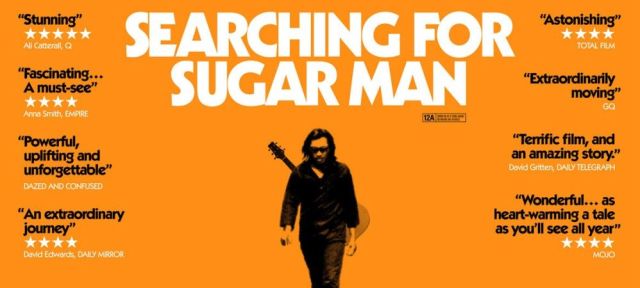
In 2012, a fascinating documentary, Searching for Sugar Man, was made about the life and music of this extraordinary man. On February 24, 2013, Searching for Sugar Man won the Academy Award for Best Documentary Feature at the 85th Academy Awards. It won a total of 40 awards worldwide.

To watch the trailer, click on the picture below. Click on  http://sugarman.org  to go to the official Rodriguez website. Enjoy!

♥ ♥ ♥ ♥ ♥ ♥ ♥ ♥ ♥ ♥ ♥ ♥ ♥ ♥ ♥ ♥ ♥ ♥ ♥ ♥ ♥ ♥ ♥ ♥ ♥ ♥ ♥ ♥ ♥ ♥ ♥ ♥ ♥ ♥ ♥ ♥ ♥ ♥ ♥ ♥ 

Posted in Elementary (Level 2), Intermediate (Level 4), Listening, Pre-Intermediate (Level 3), Songs | Leave a comment

How Can I Improve My English Speaking?

I recently received an email asking for advice from an English learner in India. I receive a lot of similar requests from students in various countries so I decided to post my reply here. I hope my advice can help you in your English-learning journey.

Firstly, the email from Sainath:

 Hi Madam,

Greetings of the day………..

My self sainath from India… Thanks for helping us.
I have started learning English but vocabulary is not at all good.
Can you help me. 
And my friends are suggesting that, if we speak with some native speaker only then we will get the English is it true? If is like that then please suggest me any on line course are there where i can interact with people directly.

Next, my reply:

Continue reading

Posted in Intermediate (Level 4), Listening, Pre-Intermediate (Level 3), Speaking & Pronunciation | Leave a comment

MODAL VERBS – What are they? How do we use Modal Verbs?

1. There are only ten Modal Verbs.

2. Modal Verbs are easy to use.

3. Modal Verbs are very useful.

https://unsplash.com/photos/leOh1CzRZVQ

“You should only eat eggs laid by free-range chickens. Chickens should not have to spend their lives in cages.”
Photo by Erol Ahmed on Unsplash.com

1. There are only ten Modal Verbs:

*will,  *shall,  *might,  *may,  must,  can, could, would,  *should,  *ought to
♦ ♦ ♦ ♦ ♦

*Some of these Modal Verbs have similar meanings:

Shall is similar to will. Shall can only be used with subjects ‘I’ and ‘We’.
Shall is more formal and not as common.
♦ I’m afraid that I shall not be able to attend the wedding.
Shall we dance?

Might and may have the same meaning when talking about possibility.
♦ We might need to buy more beer for the party.
 ♦ We may need to buy more beer for the party.   

In the past, may was used for permission,
♦ May I leave the room, please?
but this is unusual now. We usually ask,
Can I leave the room, please?

Should and ought to have the same meaning.
♦ You ought to have known better!
♦ You should  have known better!
You never need to use ought to but it’s good to know what it means if you hear or see it.

2. Modal Verbs are easy to use. The rules are simple.

Modal verbs are always followed by a Base Infinitive (except when they are used for a short answer – Yes, I can. No, I shouldn’t. etc)  For example:

Infinitives with TO Base Infinitives  
To be

To go

To make


To take

To try


To learn

To buy

be

go

make


take

try


learn

buy

I should be more careful about what I eat.

I might go to the cinema this weekend.

John could make more money if he worked harder.

I would take a holiday if I needed one.

You must try a little harder if you want to impress me.

Will Maria ever learn all this grammar?

People can buy eggs laid by free-range chickens in most supermarkets.

To make a negative statement, simply put ‘not’ or ‘never’ after the Modal Verb.

Modal verb not, never Base Infinitive
He should

I might

I could

I would

I will

You must

Chickens
should

not

not

never

never

never

not


not

eat so much fast food.

go to the party.

surf like Mick Fanning!

be able to punch a shark like Mick Fanning did!

swim outside the flags. ≈≈≈  

forget what I have told you!


have to spend their lives in cages.

https://unsplash.com/photos/wqAuyugJIeU

I would never take such a risk!…… Photo by Casey Horner on Unsplash

3. Modal Verbs are very useful.

∗ Modals tell us about the speaker’s  mood  or opinions. (mood = modal)

(∗ The twelve tenses tell us about facts, or actions – now, in the past, or what we think will happen, in the future.)

Have a look at the photo above of a tight-rope walker and then at the following use of modals. See how they provide information about the speaker’s opinions and feelings, not facts or actions.

♦  He might have fallen!  / He could have fallen!

♦ He must have been scared.

♦ He must be an idiot or a hero, or both!

♦ No-one should take such risks.

♦ His family would be furious if they knew.

♦ He will have an accident one day!

None of the above sentences are about facts or real time. We don’t know that those things are actually happening, have happened or will happen.

Only the last sentence ∼ He will have an accident one day! ∼ uses one of the twelve tenses: Future Simple – will have. When you think about it, the future is not real, is it? We know the past happened, we have the present, but the future is about predictions, promises, spontaneous decisions, and schedules, all of which may or may not result in action or fact.

However, we all need a way to talk about the future and we know it’s not real yet. In English, we use WILL for future predictions, promises and spontaneous decisions.

The following sentences provide information about real facts and describe actions by using some of the twelve tenses. Unlike with Modal Verbs, we have no idea how the speaker feels or what his/her opinion is. These are simply the facts.


♦  He didn’t fall.                                  

♦ He wasn’t scared.

♦ He is never scared.

♦ He has often taken risks.

♦ He is always taking risks.

♦ His family don’t approve of his lifestyle.

♦ He loves his life.

Features of Modal Verbs

♥ They never change their form (spelling). How good is that!
NO subject  + verb agreement.        NO 3rd person ‘S’.        NO ‘ed’.        NO ‘ing’. 

♥ They are always followed by a Base Infinitive. See above notes. 

♥ They express the speaker’s opinion or feelings about:

possibility We might go the party.
obligation I must not forget to renew my passport! 

You must obey the speed limit.
(Government rules often omit ‘must’. They simply have a picture of an infringement to show a rule or law that ‘must’ be obeyed.)

prohibition You cannot smoke here.  
necessity While on holiday, they must take malaria pills every day.
ability He’s only three but he can swim really well!
speculation/
deduction

He has been training for years for the Olympic Games. He must  be determined.

You can‘t possibly be tired! You’ve just been on a month-long cruise! You would have had plenty of rest!

At work: Oh no! Where’s my lunch? It’s not in my bag. I prepared it last night. I must have left it at home! I could have left it on the kitchen bench or my husband might have taken it by mistake.

The Modal ‘must’ is quite interesting in that English students often think that ‘must’ is only used for prohibition and obligation. However, native speakers rarely say ‘ You must … ‘ Instead, we say ‘You need to … ‘ and ‘You should …’ For example, I don’t say to my students, “You must watch the news tonight, or, You must do your homework.” I say something like, ” You really need to do revision if you want to remember what you’ve learnt today. If you want to improve your listening skills, you should watch the news.”

The most common way we use the Modal Verb ‘must’ is for speculating: saying what we believe is or was or has been true, as in the examples above.

https://www.google.com.au/search?biw=1024&bih=462&tbm=isch&sa=1&ei=x-WtWrP1LcK20AT5vITYBA&q=agnetha+faltskog+thinking&oq=agnetha+faltskog+thinking&gs_l=psy-ab.3...92756.102732.0.103530.17.17.0.0.0.0.227.3181.0j14j3.17.0....0...1c.1.64.psy-ab..0.10.1861...0j0i24k1.0.qJ8JgbO0cOI#imgrc=pIXP67wEhY9T5M:

I’m pretty sure it must have rained the day before you came.

There is a song by ABBA which perfectly demonstrates how we use ‘must’ for speculation. The song, ‘The Day Before You Came’, is entirely about how the singer remembers her past. In particular, she thinks about how boring and predictable her life was before she met her lover. She knows that she followed the same routines every day, so she sings:


I must have left my house at eight because I always do.

I must have read the morning paper going into town (on the train).

I’m pretty sure it must have rained the day before you came.

She believes that she is reporting facts about her life. However, perhaps one day she fell asleep in the train and didn’t read the morning paper. Perhaps one day her watch was wrong and she left her house at five minutes past eight.

When we are reporting past facts, we use past Tenses which are real. Of course, we can’t remember every little detail about our pasts, so we say what we believe must have happened, or what would have happened, or what might have happened, or what could  have happened. We use Modal Verbs!

Click on the video below to watch and listen to this very helpful song! I hope you enjoy it enough to listen a few times so that you will remember the structure: 

Modal + have + past participle

For more information and practice exercises on Modals for Speculation click here and here.

For the song lyrics with the Modal Verbs of deduction highlighted:

Continue reading

Posted in Grammar, Intermediate (Level 4), Pre-Intermediate (Level 3) | Leave a comment

Learn English Speaking FREE with TalkEnglish.com

I have found a great website for all of you who are learning English and want to speak fluently!

TalkEnglish.com  provides material for conversations in levels from Basic to Advanced in the following categories:

ENGLISH LESSONS

Regular Daily EnglishRegular Daily English Regular English LessonsLearn what to say and how to say things in daily conversations.

Business English Business English LessonsImprove your English fluency in a business and office setting.

English Listening English Listening Lessons: Improve your listening skills with fun questions and answers. Basic, Intermediate, & Advanced Listening Lessons

English Basics English Speaking BasicsBasics of English Speaking for beginners using common expressions. 

This section is created for English beginners who need help to understand the basics of speaking English.  We will use very simple phrases and expressions to help you with your English speaking.

There are currently 90 lessons with over 900 audio files in the English Speaking Basics Section.  Once you are familiar with the basics of English speaking, you can move to other categories such as Regular English Lessons.

English Grammar Basics of English Grammar: Build basic grammar skills pertaining to English speaking.

English Vocabulary Idioms and PhrasesLearn idioms and phrases that are hard to translate.

English Speaking Interview Interview English LessonsPrepare for any kind of interview conducted in English and gain confidence.

_________________________________

There are hundreds of lessons at TalkEnglish.com, with audio files, which are structured to give you practice in all three areas of reading, listening, and speaking  at the same time.

I hope that you find this website helpful and user-friendly.

∼∼∼∼∼∼∼∼∼∼∼∼∼∼∼∼∼∼∼∼∼∼∼∼∼∼∼∼∼∼∼∼


Posted in Advanced (Level 6+), Beginner (Level 1), Elementary (Level 2), ESL Teachers, Grammar, IELTS, Intermediate (Level 4), Listening, Pre-Intermediate (Level 3), TOEFL, Upper Intermediate (Level 5) | 1 Comment

What’s the difference between anywhere, nowhere, & somewhere?

When do I use: any, anyone, anybody, anything, anywhere? What does any mean?  

ANY 

There are three ways we usually use any:

1. In questions   

2. In negative sentences     

3. In positive sentences when it doesn’t matter

♦ ♦ ♦ ♦ ♦ ♦ ♦ ♦ ♦ ♦ ♦ ♦ ♦ ♦ ♦ ♦ ♦ ♦ ♦ ♦ ♦ ♦ ♦ ♦ ♦ ♦ ♦ ♦ ♦ ♦ ♦ ♦ ♦ ♦ ♦

1. In questions: any = one or more / a small amount or more                                                    

Do you have any questions?
          (one question or more than one)
♦ Is there any dinner left for me?
          (a small amount of dinner or more – ‘dinner’ is uncountable)                
♦ Did you know *anyone at the party?
          (one person or more)
Is there anything you need?
          (one thing or more)
♦ Are you going anywhere for your anniversary?
          (one place or more)

When we ask questions with any, we don’t know the answer. We don’t know if the answer will be ‘none’, ‘one’ or ‘fifty’; ‘none’, ‘a little’ or ‘a lot’. Any does not refer to something specific: specific questions, specific food, specific people, specific things, specific places. No, no no. We don’t know if our work colleague is celebrating his wedding anniversary by going away. Maybe he is going to celebrate with a romantic dinner at home. We don’t know his plans for his anniversary, if any, when we ask, Are you going anywhere for your anniversary? 

(* The following pairs of words have the same meaning: anyone & anybody; someone & somebody; no-one & nobody; everyone & everybody.)

When we ask questions with some, we think that we know the answer. We see someone obviously looking for something. We ask, “Are you looking for something? Can I help?” They are not looking for just anything. They are looking for something specific.

We discover that our work colleague is going away for his wedding anniversary. We ask, “Are you going somewhere romantic?” We know that he is going somewhere specific and we want more information.

https://unsplash.com/photos/yB6WFHbkX40

Are you going somewhere romantic?  …… https://unsplash.com/@hellolightbulb

2. In negative sentences: not any = not one, none, nowhere, no, nothing
  

♦ I don’t have any questions.
          (I have no questions. Questions? I have none. Not one.) 
♦ We didn’t know anyone at the party!
          (We did not know one person at the party, not even one!)
♦ I don’t need anything.
          (I need  nothing, not one thing.)
We are not going anywhere for our anniversary. 
          (We are going nowhere, not one place.)
♦ There isn’t any beer in the fridge!
           (There is no beer, none, not one bottle.)
♦ There wasn’t any food left after the party.

          (There was no food left, nothing.)

Not any is specific, definite. We can also use never with any. Never = not ever. 

♦ We never have any fun!

♦ I will never tell anyone your secret.

♦ We never go anywhere exciting.

♦ I’m throwing out these old clothes. I’ll never wear any of them again.


3. In positive sentences when the person or thing or place we are referring to is not important or it just does not matter

Any in these kinds of sentences is also not specific.     

♦ You may ask any question you like. = It’s not important what you ask. Ask your questions, one question, ten questions; it doesn’t matter.

♦ Q. Can I bring some friends to the party?
  A. Bring anyone you like! = It’s not important. Bring your mother if you like. Bring all your friends from work. It doesn’t matter who you bring. 

Take me anywhere! In her song ‘Anywhere‘, Rita Ora wants to go away, anywhere. It isn’t important where. It only matters that she goes away with the man she is in love with. Click here to watch the video.

I’ll do anything! You can play any position you want! Charlie Brown desperately wants Snoopy to come back to the team. He’ll do anything for him; it’s not important what Snoopy asks for. He can have it. He can choose any position he wants. It doesn’t matter which position; he can have it. 

English students sometimes use any when they should use some or other quantifiers.

♦ At my new school, I have made any friends.
♦ I have any money.
♦ We have any dogs.

This is a mistake. As I have explained, any is not specific; the number and amount is unclear. It could be one or a lot. How many friends have I made? One, two, fifty? How much money do I have? A little, a lot, millions? Remember that we use any in questions because we don’t know the number and amount and we are trying to find the answer. In positive sentences, we know.

♦ At my new school, I have made some friends.   
♦ I have a little money.
♦ We have two dogs.

The music group Keane sings a song ‘Somewhere only we know’. It’s about a place known only to the singer and his partner. It’s a specific place, not just anywhere. Click here for the video with lyrics.

So remember that if you want to use any in positive sentences, only use it when it’s not important or doesn’t matter. 

For practice exercises, click here  and here.

♦ ♦ ♦ ♦ ♦ ♦ ♦ ♦ ♦ ♦ ♦ ♦ ♦ ♦ ♦ ♦ ♦ ♦ ♦ ♦ ♦ ♦ ♦ ♦ 

Posted in Grammar, Intermediate (Level 4), Pre-Intermediate (Level 3), Songs | Tagged | Leave a comment

Beyond Drunk: 25 English Expressions you need to know.

An ideal way to practise your English is in social situations. If you are in an English-speaking country, you will need some basic vocabulary for when you are invited to a party or social event. Let’s start with the different kinds of parties and social occasions that you might be invited to: 

    Parties    


1. 
A typical party

We all know what a party is, don’t we? What you are likely to hear if you are invited to one, is something like “We’re *having a party on Saturday. Wanna* come?”  (*It will sound like ‘wanna’, but we are actually saying ‘want to’.) Take something to drink.

* We have parties, we have barbecues, we have drinks, and we have get-togethers. We DON’T make parties, barbecues, etc.

*  We go to parties: “I went to a wild party last Saturday!” 

*   We are at parties: “I saw you at Emrecan’s party last Saturday.”


2. A farewell party   

‘Farewell’ is an old word for ‘Goodbye’. We have farewell parties when people are leaving a workplace or a school (perhaps an English language school), or leaving their home to go travelling. You are likely to hear something like “We’re having a farewell party for Fernando on Friday night. Wanna come?”  Take something to drink.


3. A housewarming party

We have housewarming parties when we move into a new house or apartment. If you are invited, you should take a present: something for the new home, like a plant. You should also take something to drink.

I’ve always liked this expression. I like the thought of warming a house so that it’s comfortable for the new inhabitants. However, the origins of this expression, which  are medieval, are more elaborate.


∼∼∼∼∼∼∼∼∼∼∼∼∼∼∼∼∼∼∼∼∼∼∼∼

People like to spend their free time with friends and work colleagues, sometimes meeting for a drink and snacks, or a coffee. You could be invited to:

4. A barbecue

I’m sure you’ve seen ‘BBQ’. This is the written abbreviation only! Don’t say “I’m going to a B-B-Q”. Say the complete word “barbecue”. Also, you are going to a ‘barbecue’ OR a ‘party’, never a ‘barbecue party’. ‘Barbecue party’ sounds childish.

If you are invited to a barbecue, ask “What should I bring?” Sometimes the hosts are happy to provide all the food and they will say “Nothing” OR “Don’t bring anything.” Sometimes they will tell you to bring your own meat and they will provide the salads.

https://unsplash.com/photos/ZWhVZ6-nw5I

Photo by Stephanie McCabe on Unsplash.com

They don’t always tell you to bring something to drink, but always assume that you should!  If you don’t drink alcohol, bring bottled water or soft drink (coke, juice, etc). If the hosts are providing good quality food, like steak, fish, chicken and/or desserts, it would be appreciated if you took a gift for the host; for example, chocolates or some wine.


5. A get-together           

A get-together is more casual. You would hear “We’re having a get-together after work/class on Friday” or “We’re getting together after work/class on Friday”. The get-together may be at the pub or at someone’s home. It it’s at someone’s home, you know what to do: take something to drink!             


6. Drinks 

There are times when you hear “We’re going for drinks (or for a drink) after work/class.” That usually means a casual invitation to join friends, classmates, or colleagues at a local pub or bar. It’s common in English-speaking countries to have a drink or two or three and not eat anything. It’s perhaps not a great idea to drink without eating something but the custom of ‘going to the pub for a drink’ has been around for a long time. 


∼∼∼∼∼∼∼∼∼∼∼∼∼∼∼∼∼∼∼∼∼∼∼∼


 Expressions 


7. BYO      

Bring Your Own alcohol. You may have noticed that I suggested (insisted) that you take something to drink when invited to a party or social gathering. It is not acceptable to go to a party or someone’s home for a meal and drink their alcohol. It may be a normal custom in your country that the host provides everything but it is not the custom in Britain or Australia or New Zealand. I’m not sure about the USA, but you should definitely find out if invited to dinner or a party there.

When going to a barbecue, you may be told to “BYO everything”. This means that you should take whatever you want to eat and drink. You may have to cook the meat yourself. Plates, cutlery, and glasses will be provided.


8. “What are you going to be drinking?”

Now, we come to the serious stuff: planning the night ahead, working out what to buy at the bottle-shop to drink later with friends.


9. “Cheers!”

This is a common way to express good health and wishes  to your drinking companions, usually clinking glasses with everyone.


10. “It’s your shout.”

It’s your turn to buy drinks for the group. If you are drinking with a group of people and they take turns to buy drinks for you, don’t leave before you have bought a ‘round’ of drinks for them. If you don’t want to buy drinks for the group, tell them at the beginning that you will just buy your own.


11. “I’ll have one more.”

In response to “Another drink?” Another one?”


12. “We *partied all night. / We saw the sunrise. / We saw the sun come up!”

We had a fantastic time. Great party!  (* ‘Party’ can also be a verb.)


 Expressions for when you drink too much! 


13. A hangover

A sick feeling or condition that comes after drinking too much alcohol at an earlier time

We get hangovers, we have hangovers, and we suffer from hangovers.


14. “I’m never drinking again!”

A promise to ourselves which lasts until the next party when we get drunk again


15. “I feel like death!”

A really awful hangover


16. “I feel like my head is going to explode!”

A really awful hangover. Our head does not explode and we will probably feel like this again in the not-too-distant future.


17. to drink like a fish

If someone ‘drinks like a fish’, it means they drink an excessive amount of alcohol.


∼∼∼∼∼∼∼∼∼∼∼∼∼∼∼∼∼∼∼∼∼∼∼∼


    ☕ Talking about food ☕   


Expressions for eating out (not at home) include:

18. “Let’s grab a bite to eat.”

This doesn’t usually mean at a restaurant; maybe at a cafe or take-away (U.S. ‘take out’). 


19. “Why don’t we get some share plates / tapas?”

This means sharing plates of food in a restaurant. 


20. “What do you feel like?”

Discussing where to go, what kind of restaurant or cafe everyone would like.


21. “I feel like a steak …/ something cheap … / something healthy …”

 In response to “What do you feel like?”


22. “Hello. We’ve booked a table for two people. The name is Carvalho.”

This is what you could say when you arrive at a restaurant at which you have made a booking/reservation.


23. “Hello. Do you have a table for two? We haven’t made a booking.”

This is what you could say when you arrive at a restaurant at which you have not made a booking.


24. “I’d like a glass of the house red/white please.”

House wine is usually a basic wine that the restaurant has bought in bulk and can offer at an inexpensive price. 


25. “Can we have the bill please?”

You sometimes have to ask the waiter for the bill!


∼∼∼∼∼∼∼∼∼∼∼∼∼∼∼∼∼∼∼∼∼∼∼∼

Further Reading: 

How to ask people to join you for a special event & practice dialogues.

◊ Let’s celebrate! (words and phrases for parties)

Eating out vocabulary & practice dialogues.

∼∼∼∼∼∼∼∼∼∼∼∼∼∼∼∼∼∼∼∼∼∼∼∼

Posted in Advanced (Level 6+), Intermediate (Level 4), Pre-Intermediate (Level 3), Upper Intermediate (Level 5), Vocabulary | 2 Comments

English Idioms in Pictures #5

Click on the picture below to find out the meaning of the idiom  COLD TURKEY. Once on the site,  you can click on   Follow by Email  at the bottom of the page to receive more pictures and explanations of idioms FREE.cold turkey

∼∼∼∼∼∼∼∼∼∼∼∼∼∼∼∼∼∼∼∼∼∼∼∼∼∼∼∼∼∼∼∼∼∼∼∼∼∼∼∼∼∼∼∼∼

Posted in Advanced (Level 6+), Intermediate (Level 4), Upper Intermediate (Level 5) | 1 Comment

A Christmas song with Relative, Adverb, & Noun Clauses

 Seasons Greetings Everyone! 

I hope that you all have a Very Happy Christmas and a wonderful and prosperous 2018! If you don’t celebrate Christmas, I hope you have a Happy Festive Season and a wonderful and prosperous 2018!

In the spirit of Christmas, I would like to share a song with you. It doesn’t matter whether you believe in Christmas or not. In fact, the song, White wine in the Sunwas written by Tim Minchin who is an atheist.  It’s a song for everyone.

https://unsplash.com/photos/UEqblh5QQOY

Alex Holyoake @stairhopper    Unsplash.com

I first heard this song when my son Christopher, who lives in Sydney, sent me a link to it on YouTube. It reminded him of our Christmases here on the Gold Coast with his father, sister, and me.  In the eight years he’s been living in Sydney, he has been able to return here to celebrate Christmas with us every year. This Christmas once again, Christopher’s father, sister and I will be drinking white wine in the sun, waiting for him to come home.

For many Australians, and people everywhere, Christmas is a time for family gatherings. It’s a time when we remember how fortunate we are to have our families.

I love the way this song celebrates the importance of family and, unlike  the songwriter, I celebrate the religious focus of Christmas and the birth of Jesus. 

I explain some of the references in the song before the song lyrics. After the song lyrics, I focus on some of the grammar.


References:

·       break bread = have a meal with

·       an ancient religion = Christianity

·       a dead Palestinian = Jesus

·       press-ganged = forced into

·       jocks = men’s underwear

  Song: Wine Wine in the Sun  

 by Tim Minchin  


I really like Christmas.

It’s sentimental. I know, but I just really like it.

I am hardly religious.

I’d rather break bread with Dawkins  than Desmond Tutu, to be honest.


And yes, I have all of the usual objections to consumerism:

to the commercialisation of an ancient religion,

to the westernisation of a dead Palestinian

press-ganged into selling Playstations and beer,

but I still really like it.

I’m looking forward to Christmas

though I’m not expecting a visit from Jesus.


Chorus

I’ll be seeing my dad,

my brother and sisters, my gran and my mum.

They’ll be drinking white wine in the sun.

I’ll be seeing my dad,

my brother and sisters, my gran and my mum.

They’ll be drinking white wine in the sun.


I don’t go in for ancient wisdom.

I don’t believe just ‘cause ideas are tenacious, it means that they’re worthy. 

I get freaked out by churches.

Some of the hymns that they sing have nice chords but the lyrics are dodgy.

And yes, I have all of the usual objections to the miseducation

of children who in tax-exempt institutions are taught to externalise blame,

and to feel ashamed and to judge things as plain right or wrong,

but I quite like the songs.**

I’m not expecting big presents. 

The old combination of socks, jocks and chocolates is just fine by me.

‘Cause, …   Chorus

And you, my baby girl,                     

my jet-lagged infant daughter,

you’ll be handed ’round the room

like a puppy at a primary school,

and you won’t understand,

but you will learn some day

that wherever you are and whatever you face,

these are the people who make you feel safe in this world.

My sweet blue-eyed girl,

and if, my baby girl,

when you’re twenty-one or thirty-one

and Christmas comes around

and you find yourself nine thousand miles from home,

you’ll know whatever comes,

your brothers and sisters and me and your mum

will be waiting for you in the sun.

Whenever you come,

your brothers and sisters, your aunts and your uncles,
your grandparents, cousins, and me and your mum

will be waiting for you in the sun,

drinking white wine in the sun.


Darling, when Christmas comes,

we’ll be waiting for you in the sun.

We’ll be drinking white wine in the sun,

waiting for you in the sun.

Waiting for you,

Waiting …


I, I really like Christmas.

It’s sentimental. I know.




Click on  the Christmas trees  ⇑  for the Youtube video.

∗∗∗∗∗∗∗∗∗∗∗∗∗∗∗∗∗∗∗∗∗∗∗∗∗∗∗∗


Now, let’s look at the grammar!

Colour code for the song lyrics above:

Simple Sentences

Compound Sentences &, in bold, co-ordinating conjunctions

Complex Sentences &, in bold, subordinating conjunctions.

∗∗∗∗∗∗∗∗∗∗∗∗∗∗∗∗∗∗∗∗∗∗∗∗∗∗∗∗

Now, let’s have a closer look at the Complex Sentences. The Subordinating Clauses (Dependent Clauses) are all underlined and the Subordinating Conjunctions are in bold pink:

Continue reading

Posted in Grammar, Intermediate (Level 4), Relative Clauses, Songs, Upper Intermediate (Level 5) | Tagged , , | Leave a comment