How To Improve Your English Writing

You have probably heard this before, but one of the best ways to improve your English writing is to read. If you can write well in your language, you have no doubt read extensively. If you can’t write well in your language, guess what? You don’t read enough! This is especially true when learning a second language.

You know a lot of expressive vocabulary in your first language, much more than a ten-year-old.

http://blogs.jpmsonline.com/2013/09/21/mother-daughter

http://blogs.jpmsonline.com/ 2013/09/21/mother-daughter

You know a lot of expressive vocabulary in English, much more than a ten-year-old native English speaker.

However, there is an important difference. A ten-year-old English speaker will connect vocabulary more naturally. This is called collocation. Collocation is  two or more words that go together: to strongly support, to rain heavily, to come up with, thanks to. According to www.dictionary.com, collocation means:  1. a grouping together of things in a certain order, as of the words in a sentence 

Collocation is the most notable difference between advanced level English students and native speakers. For example, try this little test. Do you know the correct collocation for each of the following?

1. to resort    a) for    b) to    c) with    d) by

2. to participate    a) on    b) with    c) in    d) to

3. in search    a) of    b) for    c) with    d) at

4. a lack    a) for    b) under    c) on    d) of

5. to have a degree    a) in    b) with    c) of    d) at  

If you want to write and speak English at an advanced level; if you need to pass a TOEIC, IELTS, or CAMBRIDGE exam; you must know hundreds of collocations. Many of them involve prepositions. You need to think of them as vocabulary chunks. When you learn the word ‘listen’, learn ‘listen to’. When you learn ‘instead’, learn ‘instead of’. The most effective and enjoyable way to remember collocations is to read, read, read. Get into the habit of reading for pleasure and you will learn collocations naturally. I don’t recommend reading books you don’t like. That’s too hard and I don’t do it myself. There are plenty of wonderful, well-written books out there. You can improve your English while enjoying yourself.

I am delighted to inform you that Vanda Vadas has launched her book THE PIRATE LORD on Kindle. (It’s only AUD$4.99, and it’s free to join online Kindle.) VANDA VADAS - NOVELI wrote a post on this impressive author a few months ago, and many of you have enjoyed her short stories.

Short stories are an ideal way to start reading in English. However, to really get used to how collocations are used, it’s necessary to immerse yourself in the language, and what better way than reading a fantastic page-turner? THE PIRATE LORD is full of collocations that you should know if you wish to excel at English. These collocations are repeated throughout the book.

So, what’s THE PIRATE LORD about? Perhaps it’s best to quote directly from the author:

‘What is the essence of my brand of romance?

It’s about TRUST, RESPECT and LOVE. An earnest endeavour to deliver a memorable love story with characters who will remain in your heart long after you’ve read the last word.’

hollywoodlife.com

hollywoodlife.com

If you enjoy stories about pirates, you’ll love THE PIRATE LORD. Have you been following the adventures of Jack Sparrow in the Pirates of the Caribbean movies?

Don’t we all want some adventure and romance in our lives? Don’t we need it to help us cope with the demands of everyday life? Studying can become onerous if we don’t find ways to lighten the load and enjoy it. Get a copy of THE PIRATE LORD for your girlfriend/boyfriend and relish it together. Your friends and teachers will notice a remarkable improvement in your English!

Answers to the above test:      1. to resort to     2. to participate in           3. in search of          4. a lack of          5. to have a degree in 

Posted in Advanced (Level 6+), Cambridge, IELTS, Reading, Writing | Tagged , , , , | Leave a comment

3 Tips for learning English (or any language)

1. Make English a part of your everyday life

Don’t separate your ‘English time’ from the rest of your day. Find English speakers and talk to them. Ask questions – that’s the best way to keep up a conversation. Try to incorporate English into your daily routines: make shopping lists in English; make ‘to do’ lists in English; listen to English radio when driving; have English TV or radio on while cooking; read the English ingredient list and directions on products you buy; label household objects in English; use English recipes when cooking.Picture of 4 drinks

Start with something easy like juice recipes. You can find them online, in English of course!  Just google easy juice recipes.     Then, as your vocabulary increases, try easy food recipes. Use pictures as much as possible. You will  store   the word + image in your brain more efficiently than word + translation.

Surf the Internet in English. There is soooo much to read and listen to online which will help you improve your English. Just go to YouTube and keep looking until you find a video that interests you. I typed in World Soccer and found videos about Lionel Messi and Ronaldo.

Music videos are fabulous for aiding fluency and pronunciation if you sing along, and language learnt with music is more easily remembered. Anything learnt with music is more easily remembered. You remember the words of songs you sang as a child, don’t you? … My point exactly! I have a lot of songs on this blog, or you can find anything you want online. Be sure to find song videos with the lyrics; even native speakers often can’t  understand what people are singing about! Sing a song every day. When you know the lyrics (which won’t take long), sing in the shower … loudly!

2. Copy Native Speakers

Listening is the first step when learning a language. However, just listening is a passive way to learn a language. Language is active so we need to pay attention. Even when we’re really interested in a show on TV, we sometimes lose focus or fall asleep.

So, it’s time to talk back. Yes, you need to talk to your TV and computer. For example, when you watch the Ronaldo video, you will hear  the commentator say ‘ … and the best player in the world scores for Brazil!’ Now you repeat as closely as you can ‘ … and the best player in the world scores for Brazil!’  Do this throughout the 8:39 minute video. Do this every day, every time you get an opportunity. If you have English lessons, repeat some of the words the teacher says. Real English is an excellent website with videos of short conversations with people on the street – great practice for you with British and American speakers. Listen, repeat, and then go out and practise.

Copy native speakers every day and you will be impressed by how quickly you improve. Make it fun. Copy people being silly, romantic, annoying, boring, bossy, angry, animated. Enjoy all the ways we use this wonderful, expressive language.

 3. Revise, revise, revise

How can you remember new words, new expressions, new grammar, … new anything?

♦ 1. Think about what interests you; topics you know and remember well: movies, sport, dogs, cars, dieting, politics, religion, Lady Gaga, Harry Potter … whatever. I bet you can remember heaps of details about your chosen interest. Why? You have spent a lot of time focused on it. You have heard or seen or listened to the same information over and over again. It’s been easy to remember.

♦ 2. If you don’t revise new information within 24 hours, you risk forgetting up to 70% of it. Your brain creates pathways connecting knowledge, but it takes time and repetition. It’s natural to remember things you enjoy and if you’re happy when you’re learning something new, you are more likely to remember it. But, what about things you have to learn, like grammar?

♦ 3. You have choices:

a) Find ways to enjoy learning. I have given you lots of ideas. Think about how you’ll feel when you reach the target level.

b) Develop good daily habits. ♠ Every night, revise the notes you took in class, before you forget what they mean. You could do it in 10 minutes. ♠ Before the next class, arrive 10 minutes early and revise your notes again or speak to another student. You will be well-prepared for your class with your English brain awake, unlike the students who are sitting in class using their phone in their language. ♠ Spend 5 minute periods throughout the day, after class and on weekends, revising (for example) a few phrasal verbs or listening to a song. When it’s for just a few minutes, your brain is fresh and engaged. You will remember a lot more from 6 x 5-minute sessions than one of 30 minutes. If you’re in an English school, don’t spend the break time talking or texting in your language. Bad habit!

♠ Keep notes, a newspaper or magazine on the kitchen table and read them while you’re having breakfast, or a coffee. ♠ Establish good habits for learning, and they become natural and easy and will prevent you procrastinating. This is true for anything you want to learn and remember. You’ll feel so good when you’re organised!

********************************

Posted in Intermediate (Level 4), Listening, Pre-Intermediate (Level 3) | Tagged , | 1 Comment

Easy Listening – Practical and Social English #4

If you would like to improve your English speaking and listening, watch this video from New English File Elementary. The conversations are written under the video. Listen carefully and repeat what you hear:

Conversation 1: In a clothes shop – Buying clothes

Sales Assistant: Can I help you?
Allie: Yes. What size is this shirt?
SA: Let’s see. A small. What size do you want?
A: A medium.
SA: This is a medium.
A: Thanks. Where can I try it on?
SA: The changing rooms are over there.
A: Thank you.

SA: How is it?
A: It’s fine. How much is it?
SA: Thirty-four, ninety-nine. ($34:99)
Mark: Do you take American Express?
SA: Yes sir.

Conversation #2: Social English

Allie: Thank-you very much Mark.
Mark: You’re welcome. I’m really sorry about the coffee.
A: That’s okay. It’s late. Our meeting’s at 12:30.
M:  We can take a taxi.
A: Okay. Do you like the shirt?
M: Well, yeah. It’s exactly the same as the other one.
A: The same? It’s completely different.
M: Sorry.
A: Typical man.
M: Allie, can I ask you something?
A: Yeah. What?
M: Would you like to have dinner with me tonight?
A: Tonight?
M: Yeah. You see, it’s my birthday.
A: Aw! Happy Birthday! I’m sorry, but I can’t have dinner tonight. I’m busy.
M: Oh. How about Friday night?
A: Friday? Well, okay.
M: Do you know a good restaurant?
A: Let me think. Do you like Italian food?
M: I love it!
A: Well, there’s a new Italian restaurant. We can go there.
M: Good idea. … Taxi!

 Click here for Easy Listening – Practical & Social English #1

Click here for Easy Listening – Practical & Social English #2

Click here for Easy Listening – Practical & Social English #3

Posted in Beginner (Level 1), Elementary (Level 2), Listening, Pre-Intermediate (Level 3), Speaking & Pronunciation, Videos, Vocabulary | Tagged , , , , | Leave a comment

Writing Introductions – Advice for Advanced Students #2

Here I go again! I can’t help it! I am so impressed by Gerard Whateley’s superb usage of the English language, that I must share it with you. Read, and marvel at, his introduction to the Fight of the Century between Floyd Mayweather and Manny Pacquiao:

“Hello and welcome to OFFSIDERS.

There was a time when the Fight of the Century was not only an essential part of sporting lore, but a worthy social study offering a snapshot of oppression and struggle, or political change. Now, with boxing’s flagging appeal, today’s Fight of the Century seems reduced to garish pantomime doused in celebrity, excess, and money. Actually, the more you think about it, perhaps it is a VERY accurate depiction of our time.”

Fight of the Century.docx

Photo: Ready to rumble … thousands flocked to Manny Pacquiao and Floyd Mayweather’s weigh-in in Las Vegas. (Getty Images: Al Bello) http://www.abc.net.au/news/2015-05-03/mayweather-pacquiao-fight-of-the-century-ready-to-rumble/6440538

For more advice on written and spoken introductions, click here. 

Posted in Advanced (Level 6+), Cambridge, IELTS, Upper Intermediate (Level 5), Writing | Tagged , , , | Leave a comment

Easy Listening – Practical and Social English #3

If you would like to improve your English speaking and listening, watch this video from New English File Elementary. The conversations are written under the video. Listen carefully and repeat what you hear:

Conversation 1: In a coffee shop – Buying a coffee

Barista: Can I help you?
Mark: What would you like?
Allie: A cappuccino please.
B: Regular or large?
A: Large please.
M: And can I have an espresso please?
B: To have here or take-away?
M: To have here.
B: Anything else?
A: No thanks.
M: A brownie for me please.
B: Okay.
M: How much is that?
B: Together or separate?
M: Together.
B: That’s six forty-five please.
M: Sorry, how much?
B: $6:45. Thank you.

Conversation #2: Social English

Allie: Thanks Mark.
Mark: You’re welcome. Look, there’s a free table over there. … There you are. Oh! I’m really sorry!
A: Don’t worry. It’s always the same. When I wear white, something like this always happens.
M: Look, first, I’ll get you another coffee. Then, we can go shopping.
A: Shopping!?
M: Yeah. I want to buy you a new shirt. You can’t go to a meeting like that.
A: But we don’t have time! The next meeting’s at 12:30.
M: We have time. It’s only 11:00.
A: Are you sure?
M: Yes. Sit down and relax. Let’s have coffee and then go.
A: Well, okay.

 Click here for Easy Listening – Practical & Social English #1

Click here for Easy Listening – Practical & Social English #2

Click here for Easy Listening – Practical & Social English #4

Posted in Beginner (Level 1), Elementary (Level 2), Listening, Pre-Intermediate (Level 3), Speaking & Pronunciation, Videos, Vocabulary | Tagged , , , , | Leave a comment

Persuasive Language – Advanced & Proficiency Level Students

The University of New South Wales, Australia, has an excellent Literacy Department which provides invaluable advice on developing writing skills. For those of you who are studying English and are preparing for  exams, have a look at the following PDF document, A guide to understanding persuasive language, provided by the University of New South Wales. This document contains guidance on not only persuasive techniques, identifying tone, and things to avoid, but also, analysing visual texts: a vital tool for speaking skills and tests. Click on the UNSW logo, and prepare to be impressed!

Unfortunately, this link is no longer available, but don’t despair! I have found a well-written, concise guide on Literary Techniques by the BBC which focuses on how to use descriptive language techniques effectively. Click here for the link.

 ****************************************************************************

Posted in Advanced (Level 6+), Cambridge, ESL Teachers, IELTS, Upper Intermediate (Level 5), Writing | Tagged , , , , , | Leave a comment

Writing Introductions – Advice for Advanced Students #1

The importance of a compelling and correctly articulated introduction cannot be overestimated. We know that we need to outline our ideas clearly in an introduction when speaking on a topic, or writing an essay.

It’s not enough at an advanced level to simply state that we are going to talk about; for example, cricket; how the game started and how exciting it was. This may be adequate for levels 3 & 4,  but is it adequate enough when you are an advanced student taking an exam? I think not!

How can you develop the skills to put it all together in an impressive way? Practice, practice, practice! ♦ Listen to great speakers. ♦ Read great books. ♦ Write about something you love and then go back and try to improve your writing with richer language. ♦ Speak to English speakers. Ask for their opinions and give yours. Use new vocabulary, not the same old boring words. It takes time. Start now. Yes, now. First, watch just the first 23 seconds of the following video as Gerard Whateley introduces the world cup cricket match between Australian and New Zealand, March 2015 on the ABC TV Show OFFSIDERS.

http://www.abc.net.au/news/2015-03-02/offsiders-sunday-march-1/6274646

 Were you impressed by his introduction? I sure was! I have transcribed it all below:

“Hello, and welcome to OFFSIDERS. In a World Cup utterly at the mercy of the batsman, yesterday provided a timely reminder of the brilliant and bonkers nature of the low-scoring one-dayer.  Eden Park rollicked to the sound of a horrid Australian collapse, and then gasped as the All Blacks went within a whisker of squandering the win that recasts the host nations.” 

This is an introduction best spoken because of the passion and emphasis that Gerard adds. However, as a written text, can you see how the language jumps off the page at you? There is action and imagery galore. Gerard does not simply rely on a few well-chosen adjectives. He uses:

♦ alliteration for added impact: … brilliant and bonkers nature …;

♦ evocative verbs: … rollicked …, … gasped …;

♦ graphic nouns: … a horrid collapse …, … squandering the win

♦ vivid collocations: … utterly at the mercy of …, … a timely reminder …, … within a whisker

One of the main differences between how native speakers and advanced students use language is the use of collocations. If you want to improve your written and spoken English, you need to start using collocations. Follow my advice as detailed above. Watch Gerard Whateley on TV often. Also, click here for a detailed definition of collocations and an extensive list with definitions. When you have a spare ten minutes, try to learn a few, and use them. This will be more effective than reading them all at once.

Do you have a spare ten minutes now?

Posted in Advanced (Level 6+), Cambridge, Grammar, IELTS, Listening, Speaking & Pronunciation, Upper Intermediate (Level 5) | Tagged , , | 1 Comment

Easy Listening – Practical and Social English #2

 If you would like to improve your English speaking and listening, watch this video from New English File Elementary. The conversations are written under the video. Listen carefully and repeat what you hear:

Conversation 1: At a Hotel – Checking in

Hotel Clerk: Good evening sir.
Mark: Hello. I have a reservation. My name’s Mark Ryder.
Hotel Clerk
: Can you spell that please?
Mark: R-Y-D-E-R
Hotel Clerk 
: For five nights?
Mark: Yes, that’s right.
Hotel Clerk: Can I have your passport please?
Mark: Just a moment. Here you are.
Hotel Clerk: Can you sign here please? Do you want a smoking or non-smoking room?Mark: Non-smoking please.
Hotel Clerk: Here’s your key. It’s room 425 on the fourth floor.
Mark: Thank you. Oh, where’s the lift?
Hotel Clerk: It’s over there. Do you need help with your bags?
Mark: It’s okay, thanks.
Hotel Clerk: Enjoy your stay Mr Ryder.
Mark: Thank you.

***************

Conversation 2: Social English

Allie: Where are you from in the United States Mark?
MarkThe west coast, San Francisco.
Allie: Is it nice?
Mark: Oh yeah. It’s a great city. Are you from London?
Allie: No, I’m from Cambridge. My family live there, but I live here in London.
Mark: (Phone rings.) Sorry. … Hello darling. How are you? … I’m fine, yeah. … Don’t worry. … Fine. Fine. … That’s great. … Bye darling. I love you. … Sorry
Allie: That’s okay. Your wife?
MarkNo, no. My daughter. She always phones me when I’m travelling.
Allie: How old is she?
MarkShe’s nine. She lives with her mother in Los Angeles. We’re divorced. Are you married?
Allie: No, I’m not.
MarkHow old are you?
Allie: That’s very personal! What do you think?
MarkTwenty-five? Twenty-six?
Allie: Thanks. I’m twenty-seven. How old are you?
MarkI’m 34. Would you like another drink?
Allie: No thanks. I have to go now Mark. Our first meeting’s at ten. See you tomorrow.
MarkSee you tomorrow Allie. Goodnight.
Allie: Goodnight.

 Click here for Easy Listening – Practical & Social English #1

 Click here for Easy Listening – Practical & Social English #3

Posted in Beginner (Level 1), Elementary (Level 2), Listening, Speaking & Pronunciation, Videos, Vocabulary | Tagged , , | Comments Off on Easy Listening – Practical and Social English #2

How to Write a Sentence: #1

 What is a sentence?

There are three necessary parts to a sentence: SUBJECT (noun or pronoun) & VERB (finite) & the sentence must also have MEANING.

SUBJECT: There are several ways to make a subject, but for now, let’s look at the following:

♦ A subject can be one word; eg, sharks.    Sharks kill. (Yes, this is a sentence. It has a subject, a finite verb, and meaning.)

♦ A subject can be a phrase; eg, Sharks in Australia kill.

♦ A subject can be a noun clause; eg, Whatever sharks do scares people.

The third sentence above has an object  ‘people’. The verb ‘to scare’ must have an object. You need to know which verbs must have a direct object (transitive verbs), which verbs must not have a direct object (intransitive verbs), and which verbs have different rules. This sentence needs the object or the meaning is not clear.

♦ A subject can be a pronoun; eg, They are terrifying. They look dangerous.

The verbs in the two above sentences are followed by complements, not objects, because they are link (copular) verbs. Also, ‘terrifying’ and ‘dangerous’ can’t be objects because they are adjectives in these sentences.

Adrian's great white shark

This shark looks dangerous. It is terrifying! http://www.whalewatchsa.com-800 × 534-

VERB: Every sentence must have a verb with tense (tense = time: present, past, future). English verbs have very few forms. (forms = different spellings)

+ Present Simple Tense  positive – Sharks kill. It kills.
Present Simple Tense negative – Sharks don’t kill whales. A shark does not kill jellyfish.
?
Present Simple Tense question – Do sharks kill dolphins? Does that shark kill people?

+ Past Simple Tense positive – A shark killed the tourist.
Past Simple Tense negative – The shark did not kill the tourist’s friend.
?
Past Simple Tense question – Did the shark kill the lifesaver?

As you can see, in the positive sentences just three words: ‘kill’, ‘kills’, and ‘killed’, are complete (finite) verbs. They don’t need any help to show the tense (present or past). However, when you write a negative sentence or a question, you need a ‘helper’ (auxiliary) verb to show the tense: ‘do’ or ‘does’ for Present Simple Tense; ‘did’ for Past Simple Tense.

This is the rule for ALL VERBS in English (except the verb ‘to be’). You cannot write:

Sharks not kill whales.

A shark not kill jellyfish.

The shark not killed the tourist’s friend.

The shark kill the lifesaver?   

The auxiliary verb ‘helps’ with the ‘tense’ and the ‘person’.  

♦ ‘Dois used with I, you, we, and they in Present Simple Tense, while

♦ ‘does’ is used with he, she, and it.

♦ ‘Did’ is used with I, you, we, they, he she, and it (all persons) in Past Simple Tense.

All other tenses must use auxiliaries + participles (or base infinitives) to form a complete verb. For example, the following ‘sentence’ has no tense because ‘studying’ (continuous participle)has no tense. So it is not a sentence.

The students studying a lot of grammar.

We don’t know if the students ARE studying, WERE studying, HAVE BEEN studying, or  WILL BE studying, etc. We need the auxiliary verbs to help us, to tell us ‘when‘.

  ∗ AUXILIARY VERB  +  PARTICIPLE (S) =  ONE COMPLETE VERB.

OR

  AUXILIARY VERB  +  BASE INFINITIVE + PARTICIPLE (S) =  ONE COMPLETE VERB.

For example:

    ♦ The students have been studying a lot of grammar.

    ♦ The students were studying a lot of grammar.

    ♦ The students will be studying a lot of grammar.

The same combination of auxiliary + (base infinitive) + participle(s) is used for positive sentences (above), negative sentences, and questions (below): 

    ♦ The students have  not been studying a lot of grammar.

    ♦ Have the students been studying a lot of grammar?

    ♦ The students were not studying a lot of grammar.

    ♦ Were the students studying a lot of grammar?

    ♦ The students will not be studying a lot of grammar.

    ♦ Will the students be studying a lot of grammar?

AUXILIARY VERBS follow a very logical pattern:

TENSE  AUXILIARY VERB(infinitive)        AUXILIARY VERB(infinitive) AUXILIARY VERB
Continuous (Base verb + ING) TO BE
Perfect TO HAVE
Future WILL 
Continuous & Future TO BE WILL 
Continuous & Perfect TO BE TO HAVE
Perfect & Future TO HAVE WILL 
Continuous & Perfect & Future TO BE TO HAVE WILL 

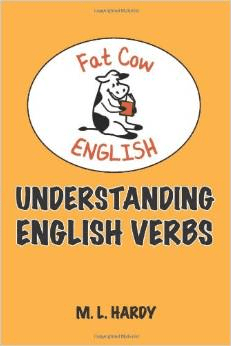
For a visual guide to all the forms of the 12 tenses, check out my book Understanding English Verbs available from Amazon.

Book cover - Fat Cows

There are three types of sentences in English: SIMPLE, COMPOUND, & COMPLEX.

You need to know which type of sentences you are writing, so that you can apply the appropriate rules.

I will explain these rules in my next post How to Write a Sentence: #2. If you would like to receive an  email when I write more posts, just fill out the Subscription Form below.

Enter your email address to subscribe to this blog and receive notifications of new posts by email.

Posted in Grammar, IELTS, Intermediate (Level 4), Pre-Intermediate (Level 3), TOEFL, TOEIC, Writing | Tagged , , , | 1 Comment

Easy Listening – Practical and Social English #1

If you would like to improve your English speaking and listening, watch this video from New English File Elementary. The conversations are written under the video. Listen carefully and repeat what you hear:

Conversation 1: On a Plane – Asking for a drink 

Flight Attendant: Would you like a drink sir?
Mark: Yes, a diet coke please.
Flight Attendant
: Ice and lemon?
Mark: Just lemon.
Flight Attendant
: Here you are.
Mark: Thank you.

***************

Flight Attendant: Coffee? Tea?
Mark: Coffee, please.
Flight Attendant
: Milk?
Mark: Yes, please.
Flight Attendant
: Sugar?
Mark: No, thanks.
Flight Attendant
: Here you are.
Mark: Thanks.

***************

Conversation 2: Social English

Allie: Hello, are you Mark Ryder?
Mark: Yes, are you Allie?
A: Yes, I am.
M: Nice to meet you.
A: And you. Welcome to the U.K. Your hotel’s in the city centre.
M: How far is it?
A: It’s about 30 minutes if the traffic’s okay.
M: Great.
A: Would you like a coffee first?
M: No, I’m fine thanks.
A: Alright, let’s go. My car’s in the car park. Can I help you with your bags?
M: No, it’s okay thanks.

Click here for Easy Listening – Practical & Social English #2

Posted in Beginner (Level 1), Elementary (Level 2), Listening, Speaking & Pronunciation, Videos, Vocabulary | Tagged , , , , , | Leave a comment