
The World Cup and Prepositions

Mexico's coach Miguel Herrera celebrates after the victory over Croatia in Group A
Emotional … Mexico’s coach Miguel Herrera celebrates after the victory over Croatia in Group A. Photo: AFP (Michael Lynch, Senior sports reporter with The Age)

As the World Cup is a very popular event for many countries, this is a perfect time to write a post about  the World Cup,  and link it to Prepositions.

Why??!! Well, …. if you can connect (link) new knowledge to something you know, it is much easier to remember.

Let’s start by having a look at some simple rules about Prepositions:

  • PREPOSITIONS show the CONNECTion between  NOUNS / PRONOUNS. (Nouns  are the names of things, places, or people. Pronouns replace nouns. ‘Noun’ = ‘Name’)

The World cup is a very popular event for many countries.

This is a good time to write a post about prepositions and link them to the World Cup.

Mexico’s coach Miguel Herrera celebrates after the victory over Croatia in Group A. (See photo above.)

Germany’s Thomas Mueller scored his fourth World Cup goal to pull level with Lionel Messi and Neymar in a 1-0 win over United States that gave his side top spot in Group G.     (The Sydney Morning Herald, June 27, 2014)Fourth goal of the World Cup -  Thomas Mueller celebrates his win. Photo  Reuters, Sydney Morning Herald

Fourth goal of the World Cup: Thomas Mueller celebrates his winner. Photo: Reuters

 Tim Howard, whom Klinsmann has called one of the world’s top five goalkeepers, is coming off the best club season of his career with Everton and will be starting in his second World Cup. (The Washington Post, June 11, 2014)

***************************

If you take the prepositions out of the above sentences, the meaning will not be clear.  For example:

With Prepositions: Mexico’s coach Miguel Herrera celebrates after the victory over Croatia in Group A.  (Mexico won. Croatia lost.)

Without Prepositions:  Mexico’s coach Miguel Herrera celebrates the victory Croatia Group A. It sounds like Croatia won! The meaning is the opposite!

  • PREPOSITIONS ARE FOLLOWED BY NOUNS

Look at the following sentences:

The Mexican team are in Brazil.

Chile lost to Brazil.

Without Luis Suarez, Uraguay lost.

In a country of 200 million people, when every boy grows up wanting to play for the Selecao, there’s a special kind of pressure on Brazilian footballers. (Michael Lynch, Senior sports reporter with The Age)

* This is a very useful rule! English learners often don’t know when to use prepositions. However, if you remember that prepositions connect nouns, and prepositions must be followed by a noun, you will understand why they are so important. The sentences above would not have a clear  meaning without the prepositions.

* Of course, there are often exceptions to rules. Prepositions are followed by nouns, but not all prepositions are acting like prepositions. Prepositions are often part of Collocations and Phrasal Verbs. For example, ‘to break up’ can mean ‘to end a relationship’:

My boyfriend and I broke up before I moved to America.

The word ‘up’ does not mean ‘up’ in the usual, prepositional sense, so it does not have to be followed by a noun. Look at this sentence:

My boyfriend and I ended our relationship before I moved to America.

There is one preposition in this sentence, ‘before’, which is important for meaning, and as you can see, it connects the noun ‘relationship’ and the pronoun ‘I’.

I will explain this rule in a future post. Until then, enjoy your English studies. Leave a comment if you have any questions.

READING FOR ADVANCED STUDENTS

If you would like to read all the latest news on the World Cup, I recommend Michael Lynch who is a senior sports writer with the ‘Age’ newspaper. His English is very impressive: exciting, colourful, and descriptive. I love the way he writes. Click here to read more sports news. 

Posted in Advanced (Level 6+), Grammar, Intermediate (Level 4), Reading, Upper Intermediate (Level 5) | Tagged , , | Leave a comment

Catching Up!

Hello Everyone,

I’ve been away for several weeks, which is why I haven’t posted anything recently. I’ve noticed that many of you have been checking my blog regularly, so please forgive my lack of new information. I’m back at work, so until I have time to write a decent grammar lesson, at least I can recommend some fabulous songs to help you with your English.

I constantly advise my English students to listen to, and sing songs. This is one of the best ways to develop natural-sounding English, improve your pronunciation and intonation, and remember collocations. Collocations are words that go together naturally, like “Happy Birthday”. We don’t say “Excellent Birthday” or “Wonderful Birthday”, do we?

1. To break down; collapse: To have a physical or mental collapse.
2. To suffer a nervous breakdown:
Don’t worry! It’s not necessary to understand all the words in a song. Native speakers often don’t know what a song is about! The important thing is to notice GROUPS OF WORDS and PREPOSITIONS.

Rixton – Me and My Broken Heart

  • Here’s a fun song by The VampsCan We Dance This video has just the lyrics (words). If you would like to watch the official video, click here.

The Vamps – Can We Dance

  • Here is one more music video. The vocabulary is more complex (difficult), so don’t expect to understand what Imagine Dragons are singing about in their song Demons unless your English level is advanced.  Again, just try to enjoy the song and sing along. They sing so clearly. It’s a wonderful song. Click here for the video with lyrics. Click here for the official video.

Imagine Dragons

Posted in Listening, Songs | Leave a comment

English Pronunciation: WORK & WALK Video #2

In this Pronunciation Video, I have explained how to pronounce two more English Vowel sounds – those found in the words Work & Walk.

PRACTICE MAKES PERFECT!

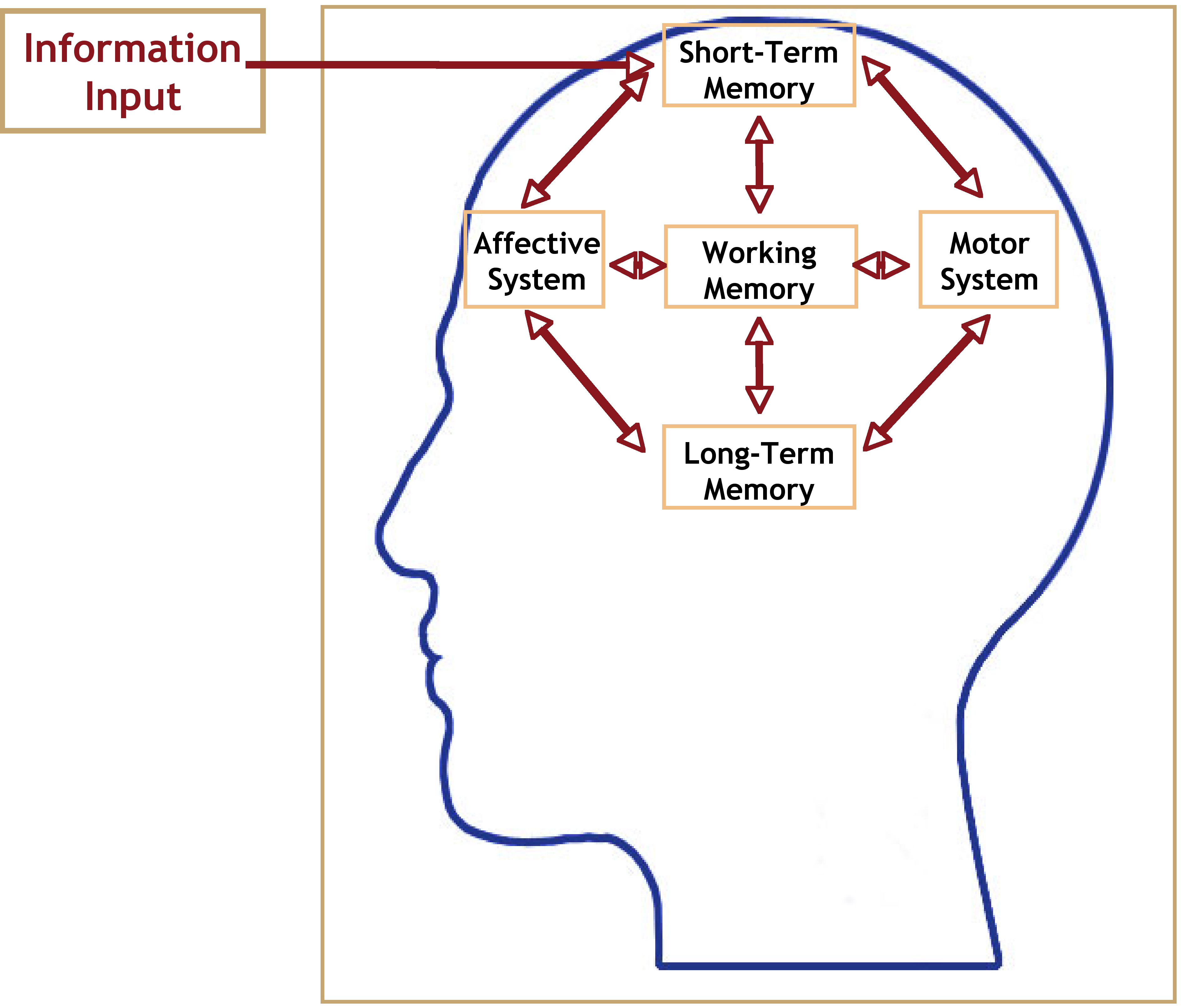
You need to practise or you will not remember this information! This is true for anything that you learn and want to remember. New information is stored in your short-term memory. If you want it to be stored in your long-term memory, you need to revise the new information.

http://cmap.ihmc.us/docs/psychologicalfoundations.html

MemorySystemsLargeThe new information may be mental (language) or physical (mouth movements). Think of learning to drive: you have to remember the road rules (mental), and at the same time which foot and hand movements to use (physical). You don’t remember everything after one or two lessons! Learning new pronunciation is mental and physical. Think how good you will feel when you can pronounce English sounds without thinking; just like driving a car!

http://www.eco-driven.co.uk/learning-to-drive.html

**************************************************************************************

Posted in Advanced (Level 6+), Beginner (Level 1), Elementary (Level 2), Intermediate (Level 4), Listening, Pre-Intermediate (Level 3), Pronunciation Videos, Speaking & Pronunciation, Upper Intermediate (Level 5), Videos | Leave a comment

English Pronunciation: WON’T & WANT Video #1

Do you have difficulties pronouncing English sounds? Well, I can help you! I have just made this Youtube video, explaining how to pronounce Won’t & Want.

I will be making more videos to help you pronounce ALL the English sounds, starting with the VOWELS. We have five vowels in English: A E I O U, and we have 20 vowel sounds.

I will also be making videos explaining how to combine sounds. So, watch this space!

I hope you enjoy my first English Pronunciation Video: Won’t & Want. If you have any requests, please leave a comment.

Posted in Beginner (Level 1), Elementary (Level 2), Intermediate (Level 4), Listening, Pre-Intermediate (Level 3), Pronunciation Videos, Speaking & Pronunciation, Upper Intermediate (Level 5), Videos | 2 Comments

Actor Matthew McConaughey’s Oscar Acceptance Speech

Matthew McConaughey pic  I have just watched Matthew McConaughey’s Oscar Acceptance Speech. I was very impresssed  that he could articulate  his feelings and  his belief system  succinctly while holding the viewer’s full attention. It’s a skill few have, and all without cue cards.

This speech is a wonderful example of how entertaining and informative 3 minutes of English language can be. It is not an example of sophisticated or academic English. It is simply an engaging and well-delivered  speech.

If you would like to get some ideas on how to  improve your English speaking: delivery, timing, and intonation,  watch the video:

To read the transcript, click here.

Posted in Advanced (Level 6+), Intermediate (Level 4), Listening, Speaking & Pronunciation, Upper Intermediate (Level 5), Videos, Writing | 1 Comment

Future tenses – part two

English students learn WILL for Future Tense and they often don’t know that native speakers also use Present Continuous and Present Simple when they are talking and writing about the future. As a result, students overuse WILL. Look at the following sentences:

1. If I miss the 5.30pm bus, I’ll get the train. It leaves at 6.00pm.

2. You’re just in time for the film! It starts in five minutes.

3. Thank goodness you’ve arrived! The game is about to start.

As you can see, Present Simple can be used for schedules and timetables. It’s easier to understand this when you remember that Present Simple is used for things that are always true and / or facts.

Let’s look again at 3:

3. Thank goodness you’ve arrived! The game is about to start.

There is often more than one correct way to say something in English. The game is scheduled to start soon. We could say:

  • The game starts in two minutes!

The game has obviously been planned, and arrangements have been made, so we could also say:

  • The game is starting in two minutes!
  • The game is going to start in two minutes!

For more information on Present Continuous for future, check my post: Future tenses – part one

For a detailed explanation of the many ways that Present Simple is used, including for future, click on the English Page website here.

Test yourself with these exercises on the Ego4you website here.

Posted in Grammar, Intermediate (Level 4), Pre-Intermediate (Level 3) | Tagged , , , | Leave a comment

Future tenses – part one

English students learn WILL for Future Tense and they often don’t know that native speakers also use Present Continuous and Present Simple when they are talking and writing about the future. As a result, students overuse WILL. Look at the following sentences:
1. What are you doing?
2. What are you doing tonight?
3. What are you going to do?

Sentences 1. 2. & 3. all use Present Continuous (are doing” & “are going”). However, sentences 2 and 3 refer to the future.

 * Simply add a Future Time Marker (tonight, tomorrow, next year, later, etc.) to Present Continuous and you are talking or asking about Future Plans or Arrangements:

What are you doing tonight?

Are you going to the party on Saturday?

What are you cooking for dinner tomorrow?

I’m seeing the doctor this Friday about my headaches.

************************************

 * BE Going to + Base Infinitive is always Future. A Future Time Marker is not necessary, but can be used for information.

What are you going to do?

I’m going to travel to India one day.

After work, I’m going to go home and watch TV.

The President is going to completely change the Health system.

I’m going to be a movie star when I leave school.

The above structure shows future plans, but not  always arrangements.

I’m going to travel to India one day. (I want to go some time in the future, but I don’t know when. I haven’t bought a plane ticket.)

After work, I’m going to go home and watch TV. (That’s what I want! I hope no-one visits me.)

The President says that he is going to completely change the Health Department. (That’s his plan now, but he might change his mind.)

I’m going to be a football star when I leave school. (This is my dream, like thousands of other boys.)

*************************************

For information on Be Going to + Base Infinitive for predictions, and ‘gonna’ click here.

To test yourself with English Exercises, click here.

I will explain Present Simple for Future in my next post: Future tenses – part two (soon, I promise!)

Posted in Grammar, Intermediate (Level 4), Pre-Intermediate (Level 3), Writing | Tagged , , , , | Leave a comment

Holiday Season Revision

Hello Everyone! I’d like to wish you all a Happy Holiday Season. For those of you who celebrate Christmas, I hope you have a very enjoyable Christmas with your family and friends. For everyone, it will soon be the end of 2013, so I wish you all a healthy and happy 2014. It’s a wonderful time, isn’t it? After a year working and studying and just living, it’s a relief to just stop and savour ‘now’.

For English students, it can be a break from intensive study. Learning a new language requires effort and committment, but that doesn’t mean it’s all just hard work. Doing a little revision while you’re on holiday can make all the difference when you resume your English studies. Just reading this blog is revision! Why not do some revision that’s as easy as reading this blog? I often recommend listening to songs. (See ‘Songs’ categories on the right.) It has to be the easiest way to do revision and improve your English! Find songs that you like, go to Youtube and click-on the Song Title + lyrics. Then, you can listen and sing along! You will often find yourself singing songs with language that is much more complex than that used in your class at school. Even easy-to-understand Beatles songs use complex language. This is a great way to learn how Grammar is used naturally before you learn the Grammar rules.

I have provided links, below, to some fabulous song videos with the lyrics.

For anyone interested in revising Sentence Structure, click here for information and exercises.

Songs:

PINK Just give me a reason   

WOTESomebody that I used to know  (This is a cover. The original artist is Goyte)

ONE REPUBLICSomething I need 

BRUNO MARS Count on me  

RIHANNAWhere have you been?  (English and Spanish subtitles)

ADELESomeone like you (English and Spanish subtitles)

Posted in Listening, Songs | Tagged , , , , , , , | 1 Comment

Present Perfect Tense – Part 2

First, read Present Perfect Tense – Part 1, posted on November 3, 2013.

*********************

Second, look at this conversation:

7pm

Peter: Hi Mum. What’s for dinner?

Mother: I haven’t started to cook it yet. You said that you were going out with your girlfriend.

Peter: We only had coffee, so I haven’t eaten since lunch and I’m really hungry! Can I eat these potato crisps?

Mother: Yes, but please be careful. As you can see, I’ve just washed the floor.  When are you going to clean up your room?

Peter: I’ve already done it!

Mother: Really. When?

Peter: I did it this morning. I vacuumed the floor in my room and put away my stuff.

Mother: That’s great. Perhaps you could help me to get dinner ready?

*********************

We use Present Perfect Tense to describe something that happened in the recent past which has a result or evidence NOW.

  • In the above conversation, the mother has not started to cook dinner yet. Result: the dinner is not ready now.
  • Peter has not eaten since lunchtime. Result: he’s hungry now.
  • The mother has just washed the floor. Result: it’s wet and clean now.
  • Peter has already cleaned his room. Result: it’s clean and tidy now.

We use adverbs in English to give more information. In the above conversation, the adverbs yet, just, and already are used. They are often used with Present Perfect Tense when we are talking about expectations and events around this time.

1. We use yet when we expect something, and/or want to know if it has happened. Peter expects dinner to be ready, but his mother has not started it yet. (I haven’t finished writing this post yet.)

2. We use just when something has happened very recently. She has just washed the floor, probably a few minutes ago. (I have just had a coffee.)

3. We use already when we expect something to happen and find out that it has happened before we expected. Mother wants Peter to clean his room and assumes that he hasn’t done it. But, he has done it! She is surprised and asks him ‘when?’ (I have already eaten my lunch and it’s only 11:00am.)

* For further explanations of Present Perfect Tense with yet, just, and already, as well as online exercises, check out these websites:

http://learnenglish.britishcouncil.org/en/grammar-reference/just-yet-still-already

http://www.ego4u.com/en/cram-up/grammar/present-perfect-simple

http://www.tolearnenglish.com/exercises/exercise-english-2/exercise-english-17320.php

* Check out this animation from The British Council:

Present perfect with ‘yet’, ‘just’, and ‘already’

Enter your email address to subscribe to this blog and receive notifications of new posts by email.

Posted in Grammar, Intermediate (Level 4), Pre-Intermediate (Level 3) | Leave a comment

English TV for Pre-school Children

Do you teach English as a foreign language to Pre-school children? I’m sure you are always trying to find new, fun activities. Children like lots of short activities when they’re learning something. (Actually, I think adults do too!)

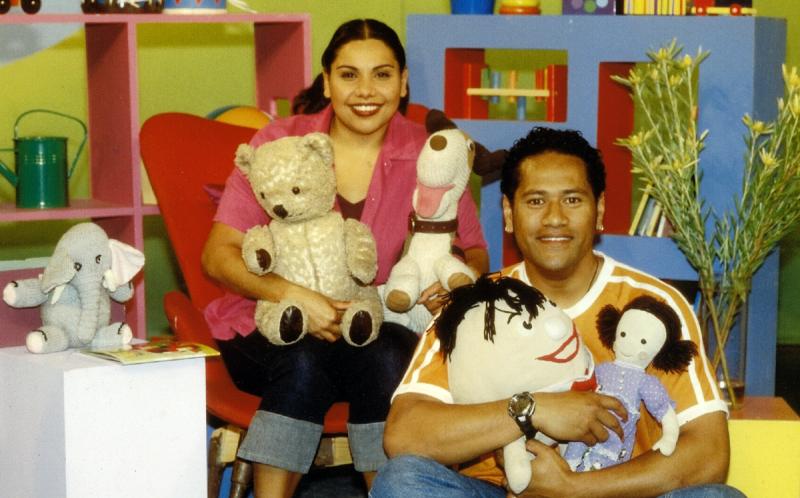
Well, I can recommend a wonderful Australian television show called PLAYSCHOOL, produced by the ABC (Australian Broadcasting Commission), which has been loved by small children since it started in 1966. (I enjoyed watching it with my children when they were small and we all still remember the songs.)

  Playschool book         Playschool toys   Playschool--2000s presenters and toys

PLAYSCHOOL Toys and Presenters

Each show features songs, games and activities. Everyday things, like cardboard and paper, are used for the activities, and you will get a lot of ideas for the classroom. You could also allow the children to watch episodes of PLAYSCHOOL (or parts of episodes) on Youtube. There are different themes for each day of the week, Monday-Friday. Repetition is important. The children will soon be singing the songs! And, once they learn them, they will never forget them!

To go to the PLAYSCHOOL Home Page, click here.

Please be careful not to infringe Copyright.

Posted in Beginner (Level 1), Children, Elementary (Level 2), ESL Teachers | Leave a comment