A Song with Noun Clauses

I have found the perfect song to help you remember Noun Clauses. First, if you are not sure what a Noun Clause is, check my earlier posts Noun Clauses #1, #2, & #3.

Backstreet Boys

The Backstreet Boys ……………………. http://www.officialcharts.com

Next, have a look at the following song lyrics. The song is, ‘As Long As You Love Me’ by The Backstreet Boys. I have highlighted the Noun Clauses in pink and the Noun Clause Markers in bold print:

Although loneliness has always been a friend of mine, I’m leaving my life in your hands.
People say (that) I’m crazy and that I am blind, risking it all in a glance.
And how you got me blind is still a mystery.
I can’t get you out of my head.
(I) Don’t care what is written in your history as long as you’re here with me.

Chorus:
I don’t care who you are, where you’re from, what you did, as long as you love me; who you are, where you’re from;
(I) Don’t care what you did as long as you love me.

By now, you know that Noun Clause Markers are Subordinating Conjunctions and the Noun Clauses are Subordinating/Dependent Clauses. Did you notice the other Subordinating Conjunctions and Dependent Clauses in the above song lyrics? When you find the Subordinating Conjunctions, the rest is easy because the Subordinating Conjunctions are Markers at the beginning of the Dependent Clauses, just like the Noun Clause Markers.

The other Subordinating Conjunctions are: although and as long as:

Although loneliness has always been a friend of mine, I’m leaving my life in your hands.

Dependent Clause: Although loneliness has always been a friend of mine,
Independent Clause: I’m leaving my life in your hands.

I don’t care who you are, where you’re from, what you did, as long as you love me.

Dependent Clause: as long as you love me
*
a)
Independent Clause: I don’t care who you are, where you’re from, what you did.
* b) Independent Clause: I don’t care.

* There is so much happening in this sentence.
In *a), you could say that the Noun Clauses are part of the Independent Clause because the Adverb Clause (as long as you love me) is the Dependent Clause. Also, the Noun Clauses are objects of the verb ‘care’ so they are important for meaning in the Independent Clause. 

In *b), you could just say the Independent Clause is I don’t care and everything else is a Dependent Clause (four  Dependent Clauses: 3 x  Noun Clauses and 1 x Adverb Clause).

(I) Don’t care what is written in your history as long as you’re here with me.

Dependent Clause: as long as you’re here with me
*a) Independent Clause: I don’t care what is written in your history.
*b) Independent Clause: I don’t care.

*See note above.          

httpwww.dailymail.co.uktvshowbizarticle-2075810Backstreet-Boys-star-AJ-McLean-marries-model-girlfriend-Beverly-Hills-ceremony.html

httpwww.dailymail.co.uktv

Here are the other two verses from the song. I have underlined the  Subordinating (Dependent) Clauses.

Noun Clauses    Adverb Clauses    Relative Clause

Every little thing that you have said and done feels like it’s deep within me.
(It) Doesn’t really matter if you’re on the run.
It seems like we’re meant to be.

 I’ve tried to hide it so that no one knows but I guess it shows when you look into my eyes.
What you did and where you’re coming from, I don’t care, as long as you love me, baby.

The language in this song is simple yet the grammar is complex. Listen to the song a few times, practise singing it in the shower, and you will soon remember several excellent examples of Complex Sentences using Noun Clauses, Adverb Clauses and a Relative Clause. Click here for the official music video. Click here for a video with lyrics but be aware that the punctuation is not correct.

Enter your email address to subscribe to this blog and receive notifications of new posts by email.

Posted in Advanced (Level 6+), Cambridge, Grammar, IELTS, Intermediate (Level 4), TOEFL, TOEIC, Upper Intermediate (Level 5) | Tagged , , , , , , | Leave a comment

Easy Listening – Practical and Social English #7

If you would like to improve your English speaking and listening, watch this video from New English File Elementary. It features speakers from England and The United States. The conversations are written under the video. Listen carefully and repeat what you hear:

Conversation 1: Ordering a meal

Waiter: Good evening. Do you have a reservation?
Allie: Yes, a table for two. My name’s Allie Gray.
Waiter: Smoking or non-smoking?
Allie: Non-smoking please.
Waiter: Come this way please.

Waiter: Are you ready to order?
Mark: Yes, I’d like the onion soup and then the steak please.
Allie: The goat’s cheese salad and the lasagne for me please.
Waiter: What would you like to drink?
Mark: Would you like some wine?
Allie: No thanks. Just mineral water for me.
Mark: Okay. A glass of red wine and a bottle of mineral water please.
Waiter: Thank you sir.
Mark: Thank you.

∼∼∼∼∼∼∼∼∼∼∼∼

Conversation 2: Social English

Mark: How was the pasta?
Allie: It was delicious.
Mark: Listen Allie. There’s something I want to ask you.
Allie: Yes. What?
Waiter: Would you like a dessert?
Allie: Yes please. What is there?
Waiter: Tiramisu, ice-cream, or fruit salad.
Allie: Fruit salad please.
Waiter: And you sir?
Mark: Nothing for me, thanks. … Allie.
Allie: Yes. … Go on Mark.
Mark: Um, well … tomorrow’s my last day and I think we, I mean I, I really liked meeting you and …
Waiter: Here you are. Fruit salad. Would you like any coffee?
Allie: Yes. An espresso, please.
Mark: The same for me please.

Allie: Sorry Mark?
Mark: Do you want to come to California next month? There’s a big conference.   I’m going to be there. Why don’t you come? What do you think?
Waiter: Two espressos. Anything else? A little brandy, a grappa?
Mark: No. Thank you. … What do you say Allie?
Allie: I’m not sure Mark. I need some time to think about it. Okay?
Mark: Alright, but please tell me before I go.
Allie: Okay.

Mark: Can we have the check please?
Waiter: Sorry? The check?
Allie: The bill Mark. We’re in Britain, remember.
Mark: Sorry. Could we have the bill please?

˜˜˜˜˜˜˜˜˜˜˜˜˜˜˜˜

Click here for Easy Listening – Practical and Social English #8

Click here for Easy Listening – Practical and Social English #1

Enter your email address to subscribe to this blog and receive notifications of new posts by email.

Posted in Beginner (Level 1), Elementary (Level 2), Listening, Speaking & Pronunciation, Videos, Vocabulary | Tagged | Leave a comment

Noun Clauses #3

First, read Noun Clauses #1 and Noun Clauses #2.

Today, I will continue giving examples of Noun Clauses and explain more structure. We are going to  look at a song called  Someone Like You  by ADELE. It is full of Noun Clauses.

Let’s have a look at the first ten lines of the song. The Noun Clauses are in pink. The Noun Clause Markers are underlined.

1. I heard that you’re settled down,
2. That you found a girl and you’re married now.
3. I heard that your dreams came true.
4. (I)Guess she gave you things I didn’t give to you.

5. Old friend, why are you so shy?
6. *Ain’t like you to hold back or hide from the light. (*Ain’t = It isn’t)

7. I hate to turn up out of the blue uninvited
8. But I couldn’t stay away; I couldn’t fight it.
9. I had hoped you’d see my face and that you’d be reminded
10. That for me it isn’t over.

♥ ♥ ♥ ♥ ♥ ♥ ♥ ♥ ♥ ♥ ♥

Do you remember that a noun is the name of something or someone? A Noun Clause is just a long, multi-word noun. Of course, it’s a long noun with a finite verb, or it would just be a noun phrase!

Like all nouns, Noun Clauses can be replaced with a pronoun. Pronouns are not just: I, you, me, it, they etc. We can say: this song ⇒ this, these songs ⇒ these, that song ⇒ that.  Be careful of the word ‘that’. It can be used in many ways. As always, when working out the structure of a sentence, look at how the words are used. In the sentences below, ‘that’ is a Noun Clause Marker in the song, or a pronoun in the sentences I’ve written.

1. I heard that you’re settled down,
= I heard    
      this.  OR  it.  OR  that.

2. (I heard) That you found a girl and (that) you’re married now.
= (I heard)   
      this / it / that              and                 this / it / that.

3. I heard that your dreams came true.
= I heard                    this / it / that. 

9. I had hoped (that) you’d see my face and that you’d be reminded
= I had hoped                this / it / that           and                    this / it / that.     

10. that for me it isn’t over.
and               this / it / that   

Did you notice that the Noun Clause Marker ‘that‘, is followed by a Clause which is a Sentence? This is true even when it has been omitted. (In lines 2. & 9. I’ve included it in brackets.)

Do you realise that all the Noun Clauses above are examples of Reported Speech?

♥ ♥ ♥ ♥ ♥ ♥ ♥ ♥ ♥ ♥ ♥

Remember the following:

Noun Clauses are always Dependent Clauses.

Noun Clause Markers are Subordinating Conjunctions.

♥♥  THAT  ♥♥

The Clause Marker ‘that’ can also be a Relative Clause Marker. In a Relative Clause, ‘that’ is a pronoun and can be replaced by ‘which’ or ‘who’. This is an easy way to check if a Clause is a Relative Clause or a Noun Clause.

4. (I) Guess she gave you things (that) I didn’t give to you. Relative Clause
= (I) Guess she gave you things (which) I didn’t give to you. Relative Clause

The singer that wrote those songs is from England. Relative Clause
= The singer who wrote those songs is from England. Relative Clause

♥  In a Noun Clause, ‘that’ is not a pronoun and cannot be replaced with ‘which’ or ‘who’.

The rumour that Adele is going to retire is not true.
The rumour which Adele is going to retire is not true.

 I heard that your dreams came true.
I heard which your dreams came true.

♥  Here is another easy way to check if a Clause is a Relative Clause or a Noun Clause. The Noun Clause Marker ‘that’ is always followed by a Sentence:

(I heard) that you found a girl 
> that + Sentence: You found a girl. Noun Clause

(I heard) that your dreams came true
> that + Sentence: Your dreams came true. Noun Clause

♥ The Relative Clause Marker ‘that’ is not followed by a Sentence. Something is missing:

(I) Guess she gave you things (that) I didn’t give to you.
> that + Incomplete Sentence: I didn’t give to you Relative Clause

The singer who wrote those songs is from England.
> who + Incomplete Sentence:wrote those songs Relative Clause

None of the Relative Clause Markers (that, who, which, whom, whose) is followed by a Sentence.

♥  The Noun Clause Marker ‘that‘ cannot follow a preposition:

The audience were delighted by that she sang.
> The audience were delighted by what she sang.
> The audience were delighted by how she sang.

They listened attentively to that she said.
> They listened attentively to what she said.

The Noun Clause Markers ‘wh…..’ cannot usually follow an adjective:

The audience were delighted what she sang.
> The audience were delighted by what she sang.

She was sorry why she had to cancel a concert.
> She was sorry that she had to cancel a concert.

 Only a few adjectives, for example, ‘sure’ and ‘certain’ can be used with ‘wh…’.

> I’m not sure what she sang first.
> I’m not certain whether Adele sang “Hello” at her last concert.

♥ ♥ ♥ ♥ ♥ ♥ ♥ ♥ ♥ ♥ ♥

These are some of the main things to check when you are studying Noun Clauses. The best way to remember any English grammar is to become involved in reading and listening to it, rather than learning a set of rules. When you read, you see Noun Clauses all the time. You don’t even have to notice them. English is full of patterns. Most languages are, or we wouldn’t be able to learn them! The more you read (and listen to English), the more natural and logical these patterns become.

I am always recommending listening to songs as an enjoyable way to improve your English. Click here to watch a video of the song with English subtitles, or on the picture of Adele above and listen to her sing ‘Someone like You’. Listen a few times and you will remember the Noun Clauses.

There are more examples of songs with Noun Clauses in my posts: Noun Clauses #1, Noun Clauses #2, and  A Song with Noun Clauses.

♥ ♥ ♥ ♥ ♥ ♥ ♥ ♥ ♥ ♥ ♥

Enter your email address to subscribe to this blog and receive notifications of new posts by email.

Posted in Advanced (Level 6+), Cambridge, Grammar, IELTS, Intermediate (Level 4), Songs, TOEFL, TOEIC, Upper Intermediate (Level 5) | Tagged , | 2 Comments

TOEIC Test – 600 Essential Words: Part 2

First, read TOEIC Test – 600 Essential Words: Part 1

Finished? Did you follow my advice? Good, because now I will continue with my list of words from the TOEIC Test – 600 Essential Words. Today, I am presenting some of the NOUNS and VERBS from the list which have the same form. It is very common, in the TOEIC test, to test students on words that can be both a noun and a verb. Think of this as positive: only one word to remember! As verbs, they are all regular, except for ‘draw’, ‘mistake’ and ‘run’. The spelling is American.

For those of you whose languages are based on Latin and Greek, try to see if the base root of the word is similar in your language. For example, the origin of the word ‘benefit’  (which means ‘something good’) – bene – is the Latin for ‘good’ or ‘well’. In Italian, ‘good’ is ‘bene’, in Spanish, it’s ‘bueno’,  and in French it’s ‘bien’.  Italian, Spanish, French, and Portuguese speakers (and sometimes German speakers) will see greater similarities in words like: apprentice, catalog, demand, comfort, and estimate; and that’s just a few! See how many more you can find.

A few of these words have different pronunciation stress which I have underlined. You will notice that the stress (the strong, long syllable) is the first syllable in the noun and last syllable in the verbs.

You can find definitions,  sentence examples, and pronunciation for each word (noun and verb) by clicking on the  Merriam-Webster’s Learner’s Online Dictionary. I have already linked some for you. There are often more than one or two meanings for each word; make sure you check for a business meaning.

Please follow my advice from Part One if you want to  succeed. Read / write sentences containing each word and do a little practice regularly. 

Noun & Verb Noun & Verb Noun & Verb Noun & Verb
address check-in display impact
approach code escort (n)
escort (v)
layout
balance compromise factor limit
bargain concern favour link
benefit conduct (n)
conduct (v)
file list
blanket contact flavor market
board control fold match
brand cover forecast matter
budget demand function mention
burden desire fund merit
catalog detail glimpse mistake
charge discount guide mix


monitor progress (n)progress (v) result stage
mortgage project (n)
project (v)
return stock
network promise review store
offer quote risk suit
order raise run target
party range sample taste
permit (n)
permit (v)
rate scan thrill
petition reason schedule turnover
plan record (n)
record (v)
search update
portion recruit sense value
practice refund service volunteer
present (n)
present (v)
reject (n)
reject (v)
ship wage
process research (n)
research (v)
site waste
profile resolve source wrinkle
      yield

Click here for TOEIC Test – 600 Essential Words: Part 3

For practice, click on TOEIC Error Recognition Tests.

Posted in Grammar, IELTS, TOEIC, Upper Intermediate (Level 5), Vocabulary | Leave a comment

How to Describe a Picture … in 4 Easy Steps

On Holiday in Cortona, Italy. April 2014

How would you describe the above picture?

Imagine that you want to describe  it to someone who cannot see it; where would you start?

WRITING A DESCRIPTION

Step #1: What do you want to say? Not sure? Try asking ‘Wh questions:

Who … ?  Where … ? What … ? When … ? Why … ? Which … ? How … ?

N.B ‘How’ can be used in addition to the ‘Wh…’ questions.

The answers to the ‘Wh … ?’ questions will provide you with a description:

Question Answer
Who are the people in the picture? … a girl / a waiter
Where are they? … outside dining /in a restaurant/ Cortona, Italy
What are they doing? … She is sitting at a table. She is smiling. The waiter is clearing dishes.
When was the picture taken? … on a warm day , April (she is wearing summer clothes)
Why
is she in this restaurant?
…  on holiday.
   
How
would you describe the girl/the waiter?
would you describe the setting (location)?
… She: beautiful/stunning, gorgeous, young, relaxed, in her 20’s
He: smartly-dressed
… lovely, delightful, pleasant, quaint, charming

As you can see, some questions are more important than others but this is a good start and you have enough information for a description.

Step #2: Write some sentences:

The picture is of a stunning girl in her twenties and a smartly-dressed waiter.

They are in a delightful restaurant.

The restaurant is in Cortona, Italy.

She is smiling at the camera.

He is clearing dishes.

It is a warm day. She is on holiday.

♠ Step #3:  Improve the sentences. To do this, link the information in the above sentences.  If all the sentences are simple, the writing sounds childish.  Read the above sentences aloud and you will see what I mean. This does not mean that you should link every sentence. Sometimes, simple sentences are perfect. However, you need to help the reader understand the connections between your ideas. Good English should be a combination of simple and complex language. You can, for example, link the sentences with Co-ordinating Conjunctions and /or Subordinating Conjunctions. There is more than one way to connect the information. Here is one example:

The picture is of a stunning girl in her twenties who is in a charming restaurant (which is) in Cortona, Italy.

It’s a warm Spring day and she is on holiday.

While a smartly-dressed waiter clears the table, she smiles sweetly at the camera.

 Here is another example:

In the picture, a gorgeous girl in her twenties is dining in a quaint restaurant in Cortona, Italy. (This is a simple sentence. There is only one subject and one verb.)

She is on holiday, it’s a warm day in April, and she is smiling happily at the camera while a smartly-dressed waiter clears the table.

♠ Step #4: Combine the sentences into a paragraph:

Example #1

The picture is of a stunning girl in her twenties who is in a charming restaurant in Cortona, Italy. It’s a warm Spring day and she is on holiday. While a smartly-dressed waiter clears the table, she smiles sweetly at the camera.

Example #2

In the picture, a gorgeous girl in her twenties is dining at a quaint restaurant in Cortona, Italy.  She is on holiday, it’s a warm Spring day, and she is smiling happily at the camera while a smartly-dressed waiter clears the table.

Now, it’s your turn! Try writing a description of a picture with a two or three sentence paragraph. Follow my four steps. Happy writing! 

  • Click here for How to Write a Sentence.
     
  • Click here for How to Describe an Experience … in 4 Easy Steps

♠ ♠ ♠ ♠ ♠ ♠ ♠ ♠ ♠ ♠ ♠ ♠ ♠ ♠ ♠ ♠ ♠ ♠ ♠ ♠ ♠ ♠

Posted in Intermediate (Level 4), Pre-Intermediate (Level 3), Writing | Tagged | 14 Comments

How to Write a Sentence: #3 Complex Sentences

* First, read How to Write a Sentence #1 & How to Write a Sentence #2.

Quick revision

A sentence must include: 1) a subject

2) a finite verb (a verb with tense)

3) meaning (a complete idea)

The following clause cannot be called a sentence because one of the three above points is missing:

Have a lot of coffee in Brazil.

Where is the subject? In many languages, the subject can be included with the verb. However, in English, we cannot do this! Correction:

We have a lot of coffee in Brazil.          brazilian-coffee-beans-300x223

They have a lot of coffee in Brazil.

There is a lot of coffee in Brazil.

The following clause cannot be called a sentence because one of the three above points is missing:

Pedro cooking the dinner.

When? There is no main verb, no verb with tense. ‘Cooking’ is a participle. It is only part of a verb. It needs an auxiliary verb (helper) to make a complete verb with tense to tell us ‘when’. It is not a sentence. Correction, eg:

Pedro is cooking the dinner. (Present Continuous Tense)

Pedro will be cooking the dinner. (Future Simple Tense)

Have a look at this clause:

When I go back to India.

What is the meaning of this? If you say these words to someone, they will wait for you to finish the sentence. They will ask, “What? What are you going to do when you go back to India?” The meaning is not clear. It is not a sentence. Correction, eg:

When I go back to India, I’m going to visit Varanasi.

Compound Sentences:

Sentence + Co-ordinating Conjunction + Sentence = Compound Sentence.

Pedro is cooking dinner but I’m not hungry.  

Pedro is cooking dinner so I’m washing up.

Pedro is cooking dinner and I’m watching TV.

 In Compound Sentences, the Co-ordinating Conjunction always goes in the middle of two (or more) sentences. We can’t start a sentence with a Co-ordinating Conjunction. This is because the two (or more) sentences have equal value. The Co-ordinating Conjunction does not belong with one sentence more than the other. That is why we put it in the middle. That is why we call it a Co-ordinating Conjunction.

** All other conjuctions are used to make Complex Sentences.

********************************************************************

Complex Sentences:

(Subordinating Conjunction + Sentence) + Sentence =  Complex Sentence.

Sentence + (Subordinating Conjunction + Sentence) Complex Sentence.

http://www.authormagazine.org/articles/nichols_adam_2010_01_14.htm

http://www.authormagazine.org/ articles/nichols_adam_2010_01_14.htm

Today, I am starting with Complex Sentences. I say “starting” because there are many ways to make Complex Sentences. I will start gradually, using easy rules. Firstly, you do need to read my earlier post on Co-ordinating Conjunctions. It explains that we can combine two or more sentences with seven Co-ordinating Conjunctions to make Compound Sentences. (The TOEIC test will only test on: and, but, & so.)

In Complex Sentences, we have two (or more) sentences which we join with a Subordinating Conjunction to make one sentence. The Subordinating Conjunction belongs to just one sentence. When we add a Subordinating Conjunction to a sentence, it becomes a ‘dependent’ clause. The two clauses are not equal. Remember that a sentence is an ‘independent’ clause. It can stand alone. A ‘dependent’ clause cannot stand alone. It’s dependent like a baby. It needs help. Let’s look at the following sentences:

https://www.pinterest.com/pin/126452702010206820/

https://www.pinterest.com/pin/ 126452702010206820/

Pedro is cooking dinner. I’m not hungry.  

Pedro is cooking dinner. I’m washing up.   

Pedro is cooking dinner. I’m watching TV.

These are independent clauses. We joined them above with a Co-ordinating Conjunction (but, so, and). We can also join them with a Subordinating Conjunction. ‘Sub’ means ‘below’ or ‘under’. This means that when we add the Subordinating Conjunction to one of the sentences, it will become a ‘Subordinating’ Clause, a dependent clause, and its value will be ‘below’ the value of the independent clause, and like all subordinating clauses, it will need ‘help’ to become a sentence. It will need an ‘independent’ clause. The following dependent clauses are all Adverb Clauses.

Although I’m not hungry, Pedro is cooking dinner.

Pedro is cooking dinner although I’m not hungry.

Because Pedro is cooking dinner, I’m washing up.

I’m washing up because Pedro is cooking dinner.

While Pedro is cooking dinner, I’m watching TV.

I’m watching TV while Pedro is cooking dinner.

When I go back to India, I’m going to visit Varanasi.

I’m going to visit Varanasi when I go back to India.

Let’s examine the following sentence:

I’m not hungry.

This is a sentence, but when we add the Subordinating Conjunctionalthough‘ (Although I’m not hungry), it becomes a dependent clause because it is not a complete idea. It is the same unfinished kind of clause as ‘When I go back to India’.

♦ Unlike in Compound Sentences, the clauses in Complex Sentences can usually be moved around; however, the Subordinating Conjunction must remain attached to the same clause (as you can see in the examples above). The Subordinating Conjunctions in the above sentences are: although, because, while, & when.

♦ Conjunctions are ‘connectors’, so when a sentence starts with a conjunction, you need a comma at the end of the Subordinating Clause to show where the clauses connect.

Because Pedro is cooking dinner, I’m washing up.

The comma is not necessary when the conjunction is in the middle, because the conjunction is connecting the clauses:

I’m washing up because Pedro is cooking dinner.

You cannot place a comma after a Subordinating Conjunction because the Subordinating Conjunction is part of the clause. You cannot separate it. Remember that a comma also means a pause, and it wouldn’t be right to have a pause after ‘because‘:

I’m washing up because, Pedro is cooking dinner.

By placing a comma after ‘because’, it becomes part of the Independent Clause ‘I’m washing up’. Wrong!

This may be more obvious to you when using Subordinating Conjunctions which are Adverbs of Time: when, as soon as, if, etc.

I’m going to visit Varanasi when, I go back to India.

I’m going to visit Varanasi as soon as, I go back to India.

I’m going to visit Varanasi if, I go back to India.

Whether it is obvious to you or not, the rule is: Don’t put a comma after a Subordinating Conjunction!

httpwww.ampersandtravel.com

Varanasi, INDIA httpwww.ampersandtravel.com

 COMMON MISTAKES

A common mistake made by  students is the use of a comma to join sentences:

Pedro is cooking dinner, I’m washing up.

What kind of sentence is this?

* It is not a Simple Sentence because it has two independent clauses:

Pedro is cooking dinner / I’m washing up.

* It is not a Compound Sentence because there is no Co-ordinating Conjunction connecting the two sentences. (and, but, so, etc.)

* It is not a Complex Sentence because it has two independent clauses, and a Complex Sentence must include at least one dependent clause and one independent clause.

What kind of sentence is it? It may be perfect grammar in your language, but it is simply not acceptable in English, beause it breaks the punctuation rules. In English, we call this a ‘comma splice’. If you are planning to do a TOEIC, IELTS, or Cambridge Test, you need to remember this. A ‘comma splice’ is a big NO-NO!

Another common mistake is the use of a Co-ordinating Conjunction at the beginning of a sentence:

Pedro is cooking dinner. But I’m not hungry.

* ‘But I’m not hungry’ is a dependent clause, so it is not a sentence.

Another common mistake is the use of a Subordinating Conjunction at the beginning of a clause without the independent clause included in the sentence:

I’m washing up. Because Pedro is cooking dinner.

* ‘Because Pedro is cooking dinner’ is a dependent clause, so it is not a sentence.

*******************************************************

Relative Clauses – Noun Clauses – Conditional Clauses – Reported Speech

If you think about it, you will realise that you already know a lot about Complex Sentences.

Relative Clauses

a) When you write or say a sentence containing a Relative Clause, you are using Complex Grammar! The 5 Relative Clause Pronouns / Markers (who, which, that, whom,  & whose) are all Subordinating Conjunctions. Look at the following sentence. Can you work out which is the Independent Clause and which is the Dependent Clause?

The song In the Night by The Weeknd is about a girl who has had a sad life.

When you can see a Relative Clause Marker, it’s not difficult to identify the Dependent Clause: who has had a sad life

When the Relative Clause (Subordinate Clause) is removed, an Independent Clause should remain: The song In the Night by The Weeknd is about a girl.

Singer: THE WEEKND ………  http://redstarlive.com/?tag=the-weekend

For more information on Relative Clauses, click here.

****************************

Noun Clauses

b) When you write or say a sentence containing a Noun Clause, you are using Complex Grammar! Noun Clause Markers are Subordinating Conjunctions and include: that, what, which, where, when, why, who, whom, whatever, if, how, however etc. Look at the following sentences. Can you work out which is the Independent Clause and which is the Dependent Clause in each sentence?

Jack hasn’t decided if he likes that song.

I don’t know who the girl in his song is.

Not many people are aware that ‘The Weeknd’ was born in Canada.

 Look for the Noun Clause Markers and you will find the Dependent Clauses:

if he likes that song

who the girl in his song is

that ‘The Weeknd’ was born in Canada

Remove the Dependent Clauses and you are left with Independent Clauses:

Jack hasn’t decided.

I don’t know.

Not many people are aware.

* NB  Complex Sentences containing Noun Clauses are not always as obvious as the sentences above. Often, the Noun Clause is the subject or object of the sentence and as such, it may be part of the Independent Clause. I will go into detail about such Complex Sentences in future posts.

For more information on Noun Clauses, click here.

****************************

Conditional ClausesConditional Clauses are a form of Adverb Clauses.

c) When you write or say a sentence with a Conditional Clause, you are using Complex Grammar:

Students don’t feel like studying when  they feel sick.

As long as you do some homework, your English will improve.

If I had more money, I wouldn’t have to work.

For more information on Conditional Clauses, click here.

****************************

Reported Speech Reported Speech Clauses are one form of Noun Clauses.

d) When you write or say a sentence using Reported Speech, you are using Complex Grammar.

Our teacher told us that we should listen to English songs.

The students complained that they couldn’t understand the lyrics.

The teacher promised that our English would improve.

* NB  The marker ‘that’ is optional in many sentences, but it is important to be aware that the marker has been ommited:

Our teacher told us we should listen to English songs.

The above sentence seems to have two Independent Clauses:

Our teacher told us. + We should listen to English songs.

This only makes sense of English Grammar rules if you know that the sentence has been reduced by removing the  Subordinating Conjunction (marker).

For more information on Reported Speech, click here.

****************************

There are dozens of Subordinating Conjunctions. I have listed the most common ones below. If you create sentences using these conjunctions,  and follow the rules I have outlined above, you should be able to write well-constructed, Complex Sentences.  

The Most Common Subordinating Conjunctions

after every time (that)* since whether
although everywhere (that)* so that which
as except that so long as whichever
as if how that while
as long as however the minute (that)* whilst
as much as if the moment (that)* who
as soon as inasmuch as though whoever
because in case what whom
before in order that whatever whomever
by which time like when whose
each time (that)* now (that)* whenever why
even if once where  
even though provided          (that)* whereas  
ever since providing (that)* wherever  

* (that)  – The Subordinating Conjunction ‘that’ can be omitted, thus reducing the sentence.

♦ For excellent examples of Complex Sentences, click here.

Click here for an exercise on writing Complex Sentences.

Click here for the song ‘In the Night’ with lyrics. ** Be aware that song lyrics are not usually well punctuated, words are left out, and grammar can be incorrect. After all, song writers are not concerned with correct grammar! Nonetheless, you will see many examples of Complex Sentences. Have a look at other songs I recommend and try to identify the Complex Sentences. The more you try, the easier it gets. Really!

Click here to go to How to Write a Sentence: #4

 

Enter your email address to subscribe to this blog and receive notifications of new posts by email.

Posted in Grammar, IELTS, Intermediate (Level 4), Relative Clauses, TOEFL, TOEIC, Writing | Tagged , , , , , | 2 Comments

How to Write a Sentence: #2

First, you should read How to Write a Sentence: #1

There are three types of sentences in English: SIMPLE, COMPOUND, & COMPLEX.

All sentences must contain a subject, a verb with tense, and they must have meaning.

You need to know which type of sentences you are writing, so that you can apply the appropriate rules. So, here we go …

SIMPLE SENTENCES Simple Sentences have one subject and one main (complete) verb,

You are reading  this blog.   

Who is hugging that girl? 

OR   two subjects and one main verb,

The girl and the paper man love each other.

OR   one subject and two main verbs,

She is hugging him and smiling. (Verbs: is hugging & is smiling)

OR two subjects and two main verbs.

The paper man and the girl are hugging each other and smiling.

Look at the following sentence. It is a Simple Sentence because it has one subject and one verb. 

The beautiful tropical gardens across the road from my old school were destroyed in the earthquake last month.  

The sentence has a lot of ‘extra stuff’, but when you take out this ‘extra stuff’, what is left?

The gardens were destroyed.

** Don’t be confused by long sentences with lots of adjectives, adverbs and prepositions. To understand the structure of a sentence, you need to find the verb first. Then, find the subject.

COMPOUND SENTENCES  Compound Sentences are formed when two or more Simple Sentences are joined (linked).

The gardens were destroyed and many houses were damaged.

The gardens were destroyed but my old school was not damaged.

The old school was not damaged so we are all relieved.

A Compound Sentence is composed of two or more sentences (independent clauses) which are joined by Co-ordinating Conjunctions. For a complete explanation of how Co-ordinating Conjunctions are used to make Compound Sentences, click here.

Click here for How to Write a Sentence: #3: COMPLEX SENTENCES


Enter your email address to subscribe to this blog and receive notifications of new posts by email.

Posted in Grammar, IELTS, Intermediate (Level 4), TOEFL, TOEIC, Upper Intermediate (Level 5), Writing | Leave a comment

TOEIC Test – 600 Essential Words: Part 5 Adjectives

First, read TOEIC Test – 600 Essential Words: Part 1

Today, I’m presenting the Adjectives from the above list. Some of the adjectives are …ed & …ing adjectives which are formed from verbs. This means that you need to work out how the word is used in a sentence before you can decide if it’s a verb, part of a verb, or an adjective. This is not difficult. Look at the following sentence:

Each year The Outstanding Business Leader Awards are presented by the Northwood University Board of Trustees.

  • In the above sentence, the word ‘outstanding’ is describing (modifying) the business leader, so it is an adjective. Look also at the words ‘business’ and ‘leader’. You might assume that these words are nouns; however, they are describing the awards, so in this sentence, they are also adjectives.

International Business Day

  • Note also that some adjectives on the list, such as ‘outstanding’ and ‘vested’, are now used only as adjectives, as the verbs are considered archaic (old and no longer used). ‘Vested’ is usually used as part of the fixed expression, ‘vested interests’. 

I have listed adjectives from the TOEIC 600 Essential Words list below with sample sentences. I have included common preposition + adjective collocations. Take note of the verbs and prepositions that can collocate with the adjectives. The TOEIC Test checks your knowledge of collocations.
For example:
BE verb + adjacent + to


ADJECTIVES:

adjacent (to) The CEO’s office is adjacent to the boardroom.
advanced You need advanced mathematical skills to be an actuary.
affordable Being able to pay the cost of something means that it is affordable.
anxious Most people feel a little anxious on their first day in a new job.
apprehensive (about) Employees often feel apprehensive about new management.
available There is no accommodation available on the nights of Friday 6 July or Saturday 7 July.
be aware (of) Business owners always need to be aware of potential competition.
basic A safe working environment is a basic human right.
be in charge (of) Who is in charge of office stationery in your workplace?
be made (of) Our office uses paper (which is) made of recycled material.
be ready (for) As a businessman or woman, you need to be ready for anything.
beforehand If I had known beforehand what my boss required, I would not have accepted the job.
busy Being busy is not always the same as being productive.
compatible Different systems (e.g., computer programs, file formats and software that can work together or exchange data) are said to be compatible.
comprehensive The CEO will soon give a comprehensive report on the company’s trading position as at the end of the financial year.
conducive (to) Poor management is not conducive to a happy workplace.
conservative We were surprised by the conservative estimate the CEO gave in regard to future exports.
convenient Employees should have the right to refuse to do overtime if it is not convenient for them.
creative Creative, hard-working people are always in demand.
crucial It is crucial to love children if you wish to work in childcare.
culinary Culinary skills are crucial if you want to be a chef.
deluxe Deluxe accommodation on cruise ships is becoming more affordable.
disparate Company takeovers often force disparate groups of people to work together.

image.slidesharecdn.com


durable All our furniture is made from durable plantation wood.
effective Effective leadership is crucial for an efficient workplace.
efficient An efficient workplace depends on effective leadership.
eligible (for) Thomas is an excellent employee, but he is not eligible for the advertised management position.
everyday It is desirable for staff morale to be high on an everyday basis.
evident It is evident that staff morale is getting worse.
general The general feeling is that staff morale is the lowest it has ever been.
hesitant The employees  are hesitant to bring up the issue of morale at the staff meetings.
in depth After in depth discussions with the Union, the management decided to do something about the low staff morale.
integral The well-being of staff is an integral ingredient of a successful business.
joint Betty and Bob are joint owners of a new restaurant.
lengthy After lengthy negotiations with the local council, Betty and Bob were able to obtain a liquor licence for their restaurant.
logical It’s logical to expect promotion when one is the most suitable and qualified applicant, but this does not always happen.
long term Customer loyalty depends very much on long term customer satisfaction.
loyal Loyal  staff should be valued like gold.
mandatory In Australia, regular inspections of hygiene conditions in restaurants are mandatory.
multiple There are multiple steps on the success ladder.
narrow To expect staff to work long hours for very low pay shows a narrow and uncharitable attitude towards one’s fellow man.

on hand Kerry is always on hand if you need some help.
on track Time is limited so we need to keep this meeting on track.
optional Overtime is optional and should be paid at a higher hourly rate.
outdated  Technology seems to become outdated soon after everyone has learned how to use it!

cdn2.hubspot.net

outstanding The amount of credit outstanding for fuel is now $50,000.
overcrowded Because apartments in the city centre are overcrowded, affordable housing should be  a government priority.
perceptive A team leader needs to be perceptive of people’s needs and good at supporting individuals.
pertinent All pertinent aspects of job requirements should be clear to potential employees.
productive The  current output is 6,000 litres per week which represents 95% of the company’s productive capacity.
prospective It is normal practice for hotels to require confirmation from prospective guests in the form of credit card details.
realistic (about) Most employees are realistic about their work performance and their value to their employers.
regardless (of) All eligible employees may vote and stand for election regardless of length of service.
registered Not all companies are registered for VAT purposes. 
remote Senior Managers are often remote from the majority of the staff.
restricted The manufacturer sells to a restricted number of outlets.
serious Non-delivery of the goods will result in a serious financial loss.
sharp The sharp decline in Jack’s firm was due to financial extravagance and a lack of good management.

significant Methanol could well become a significant fuel for transportation.
smooth For the changeover to be smooth, all departments need to be working at maximum efficiency. 
specific Many skills are job specific; that is, they are only useful in certain types of jobs.
strong A strong Japanese yen is seen as essential if inflation is to be kept low.
subjective Reasonableness is a subjective judgement.
successive Successive reports have exaggerated the yearly profits.
tedious Factory managers would improve morale if they could find a way to change tedious work.
thorough Managers should have a thorough understanding of the duties of all staff.
time-consuming Replacing staff is expensive and time-consuming.
valid Ron is often late for work. None of his excuses is valid.
vested Because replacing staff is expensive and time-consuming, managers have a vested interest in looking after current staff.
commensurate (with) Your wages should be commensurate with the amount of time you have worked.
 overall Before you arrive for a job interview, have an overall picture in your mind of the image of yourself that you want to convey.

For practice, click on TOEIC Error Recognition Tests.

Click here for TOEIC Test – 600 Essential Words: Part 1

Posted in Grammar, IELTS, Intermediate (Level 4), TOEIC | Tagged , , | 2 Comments

New Year’s Eve Preparation

It’s that time of year again. We’re all a bit tired from working and/or studying, so we’re having a break. At least, I hope you’re having a break from study and if you’re working, I hope you’re being well-paid!

NIGELLA LAWSON

As we approach New Year’s Eve, are you prepared? Have you given any thought to how you are going to survive New Year’s Eve and wake up feeling good on the first day of 2016? It would of course be much better to wake up feeling fantastic, but I’m being realistic here! We do tend to drink a little too much at this time, so let’s  try to reduce the severity of  a possible hangover on January 1, 2016. Here are my suggestions:

1. Have a big dinner before you go out. Include protein: steak, chicken, lamb, or fish.

2. Alternate alcoholic drinks with water or juice. Try to have a jug of water handy.

3. Drink lots of water before you go to sleep. Coconut water is even better. Coconut water and sports drinks are great for hydration and at replacing the minerals that alcohol destroys.

4. Prepare healthy food to keep in your fridge. I love Nigella Lawson’s Antioxidant Fruit Salad. It’s bursting with goodness and will help you recover if you have a few too many drinks on New Year’s Eve. The recipe below is from http://www.foodnetwork.com   Click on the name NIGELLA LAWSON if you would like to listen to and watch her on YouTube preparing this recipe (approximately six minutes in) and other Feel Good Food. She speaks English beautifully.

Nigella’s Antioxidant Fruit Salad

Ingredients

  • 1 mango
  •  
    1 cup blueberries
  •  
    1 pomegranate
  •  
    2 teaspoons lime juice

Directions

Cut the mango in half around the stone, and then criss-cross the flesh of the mango halves with a knife into 1/2-inch squares.

Push the diced mango flesh outwards and then slice off the squares from the skin into a bowl.

Tumble in the blueberries, then halve the pomegranate and bash out the seeds with a wooden spoon over the mango. Finally squeeze over the lime juice and serve.

 ♦♦ ♦♦ ♦♦ ♦♦ ♦♦ ♦♦ ♦♦ ♦♦


Posted in Intermediate (Level 4), Listening, Pre-Intermediate (Level 3), Speaking & Pronunciation, Videos | Tagged , , | Leave a comment

The 12 English Tenses – A brief summary

The 12 English Tenses – A brief summary

If you are able to read this, then you have already learnt the most difficult of the twelve English Tenses: Present Simple. Congratulations! It gets easier from now on. Really.

How can we have 12 tenses? Surely there are only three: present, past, and future??  Well, yes, but we express time in more than three ways.

♦ We use SIMPLE Tenses to express:

∗ action/states anytime, sometimes, always – Present Simple

∗ action/states in the finished past – Past Simple

∗ action/states in the future – Future Simple

♦ We use CONTINUOUS Tenses to express CONTINUING actions / actions IN PROGRESS. The actions are temporary.

♦ We use PERFECT Tenses to express actions or states which connect TWO TENSES. Time doesn’t stand still, does it? The past affects the present, the present affects the future. They are all connected and the PERFECT Tenses express them perfectly.

Maurits Cornelis Escher

Roof detail from ‘Ascending and Descending’ by M C Escher

I shall give details and examples below. Click on the links to read my previous posts which give more information about particular tenses or to an Internet site which gives more information and practice exercises.

SIMPLE TENSES x 3

1. Present Simple

This is often the most difficult tense for students because it doesn’t always refer to the present.  It is often confused with Present Continuous.

Which tense can you use to describe …

facts or the state of things?
Tokyo … in Japan. Sharks … dangerous. An octopus … eight legs.  This watch … to my grandfather.

Let’s try Present Continuous Tense:

Tokyo is being in Japan. Sharks are being dangerous. An octopus is having eight legs. This watch is belonging to my grandfather.

** We use Present Continuous Tense to describe something which is in progress now and is temporary. This is not true of the sentences above.  There is no temporary action in progress. We cannot use Present Continuous. We must use Present Simple:

Tokyo is in Japan. Sharks are dangerous. An octopus has eight legs. This watch belongs to my grandfather.

Which tense can you use to describe …

opinions, feelings, things which are always true or permanent?
I … in ghosts. Most people … snakes. Water … at zero degrees.

Let’s try Present Continuous Tense:

I am believing in ghosts. Most people are hating snakes. Water is freezing at zero degrees.

** Again, we are not describing temporary actions, so we cannot use Present Continuous Tense. We use Present Simple:

I believe in ghosts. Most people hate snakes. Water freezes at zero degrees. 

Which tense can you use to describe …

habits & routines?
Andreas … up at 6.00am every morning. He … work at 9.00am. He … out every Saturday night with his friends.

Let’s try Present Continuous Tense:

Andreas is getting up at 6.00am every morning. He is starting work at  9.00am. He is going out every Saturday night with his friends.

** We are not describing temporary actions in progress now. Andreas is not getting up now. He is not starting work now. We are describing habits, routines that are repeated, so we cannot use Present Continuous Tense. We use Present Simple:

Andreas gets up at 6.00am every morning. He starts work at  9.00am. He goes out every Saturday night with his friends.

2.Past Simple

Past Simple is used to describe actions or states which started and finished in the past. There is no connection to now.

♠ A shark attacked a tourist at Backwash Beach yesterday.

♠ Andreas got up at 6.00am this morning and started work at 9.00am.

♠ He went out last Saturday with Pablo and Patrik.

Andrea at the pub with his friends. www.huffingtonpost.com-570 × 238-

Last Saturday, 9.00pm – Andreas at the pub with his friends
http://www.huffingtonpost.com

∗∗ Past Simple sentences must always refer to a time in the past. If you say to a native speaker, ‘A shark attacked a tourist at Backwash Beach’, he will ask ‘When?’ If you say, ‘Andreas went out’, the native speaker will ask ‘When?’ because the sentences are not finished. Read some newspaper reports and you will see past time markers (eg. yesterday, last year) in the articles which use Past Simple.

∗∗ The past time does not need to be stated if it is understood: Question: ‘I heard that Andreas went out last Saturday. Who did he go out with?’ Answer: ‘He went out with Pablo and Patrik.’ You don’t need to repeat ‘last Saturday’.

3.Future Simple 

Future Simple is used to refer to decisions, predictions, promises, offers, and schedules at some time in the future, which is not always stated. We do not use Future Simple for plans:  Kumiko will start an English course next week.

 http://bhsworldlitopedia.wikispaces.com

http://bhsworldlitopedia. wikispaces.com

♠ I think that Brazil will win the next World Football Cup.  

♠ I promise that I will always love you.  

♠ I’ll see you later.

♠ I’ll help you with your homework if you like.

♠ The next train will leave at 7.00pm.

If I don’t study, I won’t pass the test.

CONTINUOUS Tenses x 3

1.Present Continuous

We use Present Continuous to describe what is happening now; an action which is in progress and has not finished, a temporary action:

♠ I am writing this post about tenses. (I’m not finished yet.)

♠ You are reading this post. I don’t know what else you are doing. Perhaps, you are drinking coffee while you are studying English tenses. Perhaps, you are having a conversation with someone while you are reading this.

2.Past Continuous.

Past Continuous is used to describe an action which was in progress at the same time in the past as another action, or at a particular time in the past. Look at the photo above of the three men. When you describe what was happening at the time the photo was taken, you use Past Continuous:

♠ Andreas and his friends drank a lot of beer while they were watching the soccer match at the pub.

At 9.00pm last Saturday, Andreas and his friends were watching the soccer and drinking beer at the pub.

 ∗∗ We do not use Past Continuous without a reference to the time  or the action that happened at the same time.

Andreas was watching soccer at the pub last Saturday.

Andreas was drinking beer at the pub last Saturday.

∗∗ In the above two sentences, there is no reference to the time Andreas was watching TV or drinking beer. There is no reference to action that was happening at the same time. So, we cannot use Past Continuous. We must use Past Simple: Andreas watched soccer at the pub last Saturday. Andreas drank beer at the pub last Saturday. These two sentences answer the Past Simple question, ‘What did Andreas do last Saturday?’

3.Future Continuous

Future Continuous is used to describe an action which will be in progress in the future. It will not be finished.

♠ At 9.00pm next Saturday, Andreas and his friends will be drinking beer and watching sport on TV in the pub.

♠ At 8.45pm tomorrow night, I will be eating  at an Indian restaurant with my husband.

♠ One hundred years from now we will all be driving flying cars!

 Flying Police Cars inthefuture.wordpress.com-

Flying Police Cars
inthefuture.wordpress.com-

PERFECT  TENSES x 3

1.Present Perfect

Present Perfect Tense sentences are full of information. You can have one sentence to talk about the past, one sentence to talk about the present, and one sentence to talk about the time in the middle; OR, you can have ONE  sentence in Present Perfect, which will give you all the information from the 3 sentences more clearly and efficiently.

♠ The singer James Blunt has sold 20 million albums.

∗∗ This sentence tells us about experience in the singer’s life, and that James Blunt 1) started selling albums sometime in the past and 2) this action continued from that time until 3) now. If we use Past Simple – The singer James Blunt sold 20 million albums – we are talking about the finished past. However, James Blunt is alive and well, his albums are for sale now. We would use Past Simple to talk about Michael Jackson. – He sold millions of albums in his life. His life sadly is finished and there is no connection between Michael Jackson and the present. Present Perfect always connects the past and the present. Look at what makes up the Present Perfect Tense: one present tense verb – HAVE or HAS, and one past tense verb – PAST PARTICIPLE.  Present + past = Present Perfect Tense.

2. Past Perfect

Past Perfect is used to express an action which happened in the past before another action in the past, or an action which happened before a specific time in the past.

♠ When I got home at 6pm last night, my husband had cooked my dinner.

** This sentence tells us about two times in the past:  6pm last night, and a period of time before 6pm last night:

I got home at 6pm.
My husband cooked dinner before 6pm.

Compare the following Past Simple sentence:

♠ When I got home at 6pm last night, I cooked dinner.

** This sentence tells us about two actions in the past.

I got home at 6pm last night.
I cooked dinner last night.

We know that I cooked dinner after I got home because I couldn’t cook dinner while driving or walking home. Also, ‘when’ can mean ‘just after’. However, it is not always this obvious which action happened first if we just use Past Simple:

♠ This morning, I went to the gym and I prepared some lessons.

** Which action happened first? This sentence doesn’t tell us. It’s not important.

♠ The plane had taken off  by the time Thomasz  arrived.

** This sentence tells us that Thomasz missed the flight because he arrived after the plane took off.

 ♠ He missed his flight because he hadn’t set the alarm clock.

** He didn’t set the alarm clock so he missed his flight.

3. Future Perfect

As with all Perfect Tenses, Future Perfect connects two time frames. However,  one action occurs before a second action  which is in the future.

♠ By the time Andreas graduates next month, he will have completed three years of study.

** Andreas started studying nearly three years ago.

♠ Next March, we will have been married for ten years.

** We got married nearly ten years ago.

      PERFECT & CONTINUOUS Tenses x 3

1.Present Perfect Continuous

With Present Perfect Continuous,  an action or event began in the past and is in progress now. (Perfect Tenses = two times are connected.) It may still be continuing.  The focus is on the length of time:

♠ Andreas has been studying English for nearly three years.

** How long? Three years.

The difference between Present Perfect Continuous Tense and Present Perfect Tense is that with Present Perfect Continuous, the focus is on ‘How long?’, and with Present Perfect, the focus is on ‘What?’ (‘When’ is not important.)

♠ Andreas has studied French and Spanish as well as English.

** What? French and Spanish.

2. Past Perfect Continuous

Past Perfect Continuous Tense is used to describe an action or event that started in the past and continued until a second time in the past. As with other Continuous Tenses, the focus is on something in progress and its duration. As with other Perfect Tenses, the focus is on connecting two times.

♠ I had been waiting for the bus for an hour when I decided to walk home.

** We often use Past Continuous instead of Past Perfect Continuous but this can change the meaning:

Examples: (from www.englishpage.com)

  • He was tired because he was exercising so hard.
    This sentence emphasizes that he was tired because he was exercising at that exact moment.
  • He was tired because he had been exercising so hard.
    This sentence emphasizes that he was tired because he had been exercising over a period of time. It is possible that he was still exercising at that moment OR that he had just finished.

 3. Future Perfect Continuous

This tense is used to show an action or event that will continue up to a particular time in the future. As with other Continuous Tenses, the focus is on something in progress and its duration. As with other Perfect Tenses, the focus is on connecting two times.

♠ By the time Pablo goes on holiday next month, he will have been studying English nonstop for six months.

♠ By April next year, I will have been teaching at Langports English Language College for nine years.

Summary:

Simple Tenses x 3
Continuous Tenses x 3
Perfect Tenses x 3
Perfect & Continuous x 3      TOTAL TENSES = 12

___________________________________

As I said at the beginning of this Post, Present Simple Tense is the most difficult for students to understand. Present Perfect Tense is the next most difficult; it takes a while for students to realise that even though much, if not all, of the action being described took place in the past, the time period is not finished.

That leaves ten more tenses. These are all logical. They all follow logical steps. In English, we can always find a tense to express ‘when’ exactly. The 12 tenses in English cover all possibilities of real time. We also use adverbs of time: yesterday, while, for an hour, by the time, etc. to give more information ….. but that’s a Post for another day!

♠ ♠ ♠ ♠ ♠ ♠ ♠ ♠ ♠ ♠ ♠ ♠ ♠ ♠ ♠ ♠

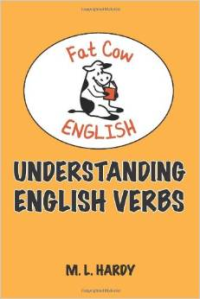
For a VISUAL Guide to the easy steps in conjugating the 12 English Tenses, check out my book, Understanding English Verbs available from Amazon:

Book cover - Fat Cow

My book UNDERSTANDING ENGLISH VERBS (Fat Cow English) is a quick, easy guide for those studying English as a second language. Check it out at http://www.amazon.com/Understanding-English-Verbs-Fat-Cow/dp/1439251029/ref=sr_1_4?s=books&ie=UTF8&qid=1417688454&sr=1-4&keywords=understanding+english+verbs

My book UNDERSTANDING ENGLISH VERBS (Fat Cow English) is a quick, easy guide for those studying English as a second language.

Posted in Grammar, IELTS, Intermediate (Level 4), TOEFL, TOEIC, Upper Intermediate (Level 5) | Tagged , , , , , , , | 14 Comments